CNC Machining
Stainless Screws in an Aluminium Housing? Why the Joint Corrodes — and What to Specify So It Doesn't
Stainless screws in aluminium parts corrode the aluminium, not the screw. Why mixed-metal joints fail outdoors, and what to write on the drawing to stop it.
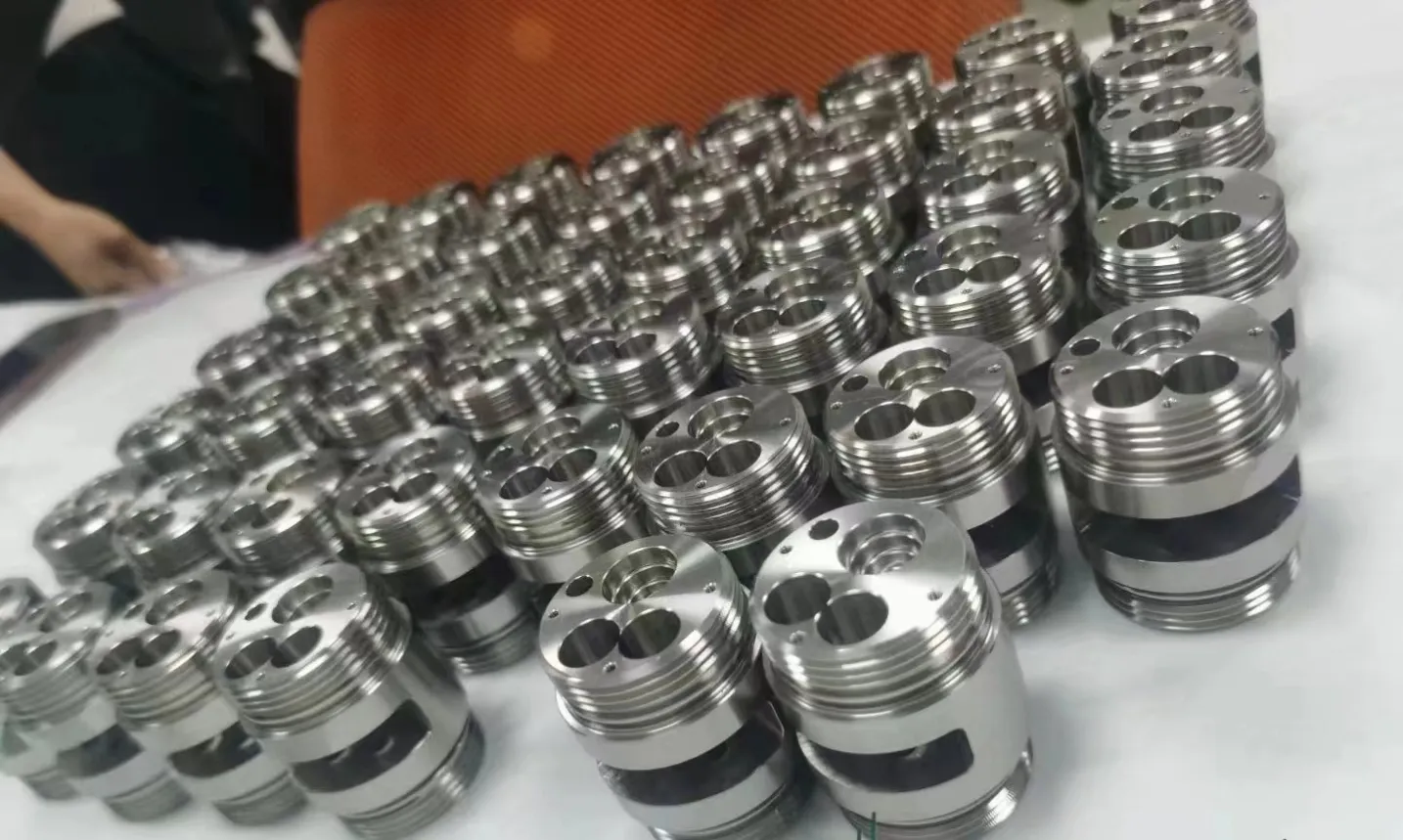
1. The joint that passed inspection and failed in the field
A buyer orders an aluminium enclosure with stainless steel screws. The parts arrive, the dimensions check out, the screws fit, the assembly goes together cleanly. Six months later the customer sends a photo: white powder and pitting around every screw head, and two screws that no longer hold their torque. The parts were made to drawing. The drawing was never the problem — the joint was.
This is the most common mixed-metal failure in machined assemblies, and it surprises buyers because nothing about it shows up at receiving inspection. The corrosion does not happen in the machine shop. It happens in service, slowly, wherever two different metals touch each other in the presence of moisture. By the time anyone notices, the damage is done and the fix is a redesign, not a rework.
If your assembly bolts one metal to another — and almost every assembly does — the drawing needs to say how the joint survives its environment, not just what size the holes are. The rest of this article explains why the joint corrodes, which pairings are risky, and what to write on the drawing so the first batch still looks right a year later.
2. Why it happens: three conditions, and the aluminium always loses
Galvanic corrosion needs three things at the same time, and removing any one of them stops it:
- Two different metals in electrical contact. A stainless screw driven into an aluminium housing is a textbook example. So is a brass fitting pressed into an aluminium plate, or a copper terminal bolted to an aluminium bracket.
- An electrolyte. Any conductive moisture will do: rain, sea spray, condensation, or even persistent humidity in storage. The joint does not need to be underwater — a damp environment is enough.
- A difference in how readily each metal gives up material. In the pair, one metal becomes the anode and corrodes; the other becomes the cathode and stays largely intact.
Here is the part that catches buyers out: in an aluminium–stainless pair, the aluminium is the anode. The stainless screw looks perfect while the aluminium around it pits and loses thickness. The expensive, corrosion-resistant fastener is not the victim — the housing is. The same logic applies to aluminium against brass or copper, where the gap between the metals is wider and the attack on the aluminium is faster.
Two details make the problem worse. First, area matters: a small aluminium part bolted to a large stainless bracket corrodes faster than a large aluminium part with a small stainless screw, because the same corrosive current is concentrated on less aluminium. Second, a crevice makes it worse: the tight gap under a screw head or between two clamped faces traps moisture and keeps it there long after the outside of the part has dried.
The practical consequence is simple. A joint that lives indoors, dry, in a heated office may never corrode at all. The same joint on outdoor equipment, near the sea, or in a cabinet that condenses overnight is a corrosion cell waiting for water. The environment decides the risk —
which is why the environment belongs on the RFQ, not just the drawing.
3. Which pairings to worry about
Not every mixed-metal joint is a problem. The four combinations below cover most of what buyers actually order. They are typical industry guidance for judging risk, not a guarantee for any specific environment — the service conditions decide the final answer.
- Spec card 1 — Aluminium + stainless steel (304/316): The classic risky pair, and the most common one. High risk outdoors, near the sea, or anywhere the joint gets wet regularly. Low risk in a dry indoor cabinet. If you must use stainless fasteners in an aluminium part that sees moisture, isolate the joint (Section 4).
- Spec card 2 — Aluminium + brass or copper: Higher risk than aluminium with stainless. Brass and copper sit further from aluminium in the galvanic series, so the aluminium corrodes faster. Avoid direct contact in any damp environment; if the design needs a brass fitting in an aluminium housing, isolate it or choose a different pairing.
- Spec card 3 — Stainless + stainless, or the same metal throughout: The lowest-risk option. Matching the fastener metal to the part metal removes the galvanic cell entirely. Where the joint allows it — and where the strength is sufficient — this is the simplest fix there is, because there is nothing to isolate and no coating to maintain.
- Spec card 4 — Aluminium + zinc-plated steel fasteners: A middle case. Zinc is less noble than aluminium, so the zinc coating corrodes first and protects the aluminium for a while — that is the coating doing its job. But the protection lasts only as long as the coating does. Once the zinc is consumed at the contact point, the aluminium starts to corrode. Treat this as a time-limited answer, not a permanent one, and check what happens when the coating wears through.
One more combination worth naming: aluminium against aluminium, or stainless against stainless, with a different finish on each side — for example, an anodized aluminium cover on a bare aluminium housing. The metals are the same, so galvanic corrosion is not the concern. Scratches through the finish and trapped moisture are — a different problem, with a different fix.
4. Four ways to stop it — and what each one costs you
There is no single right answer; there are four levers, and most good designs use two of them together.
- Break the electrical contact. Isolating washers and sleeves between the fastener and the part stop the current from flowing, and no current means no galvanic corrosion. This is the most reliable fix for a joint that must stay mixed-metal. Note two things: isolate both sides of the joint, not just under the screw head — a washer under the head alone leaves the shank in contact through the hole — and remember that isolating hardware is a standard fastener accessory, not a machining operation, so it belongs on the bill of materials and the assembly note, not as a dimension on the part drawing.
- Match the metals. Where the joint allows it, use fasteners in the same metal family as the part. The trade-off is strength: aluminium fasteners are weaker than steel ones, so this works for light clamping loads and covers, not for a structural joint that needs a steel bolt. Ask whether the joint actually needs the stronger fastener, or whether the habit of specifying stainless everywhere is doing the damage.
- Put a barrier between the metals and the moisture. Anodizing on aluminium, and plating on steel fasteners, are finishes buyers commonly specify to protect the surfaces — confirm availability, type, and sequence with your supplier at the quoting stage, as finishes are specified options rather than a fixed service list. A barrier helps, but it is not a cure: a scratch through the anodize, a bare hole edge, or a thread cut after finishing re-opens a path for moisture. If the joint will be exposed, combine the finish with isolation rather than relying on the finish alone. And check the sequence: a finish applied after assembly cannot protect the contact faces that are already clamped together.
- Keep the joint dry by design. Water that drains away cannot corrode anything. Avoid pockets and blind recesses that trap water around a fastener, and give the joint a drainage path where the part will see rain or wash-down. This costs nothing on the drawing — a drain hole or a change in orientation — and it protects every other finish choice you make.
A practical step you can take today: pick your most common assembly, look at every fastener in it, and write down the metal of the fastener and the metal of the part it touches. Any pair where the two metals differ, in a part that will see moisture, is a joint worth one of the four fixes above. The check takes ten minutes; the redesign after a field failure takes months.
5. What to write on the drawing and the RFQ
Before you send the drawing, add these five items. Each one removes a round of back-and-forth, and together they tell the supplier what the joint has to survive — not just what it has to measure.
- Service environment — indoor dry, outdoor, coastal, wash-down, or condensing. One line changes the whole answer, and without it the supplier has to guess.
- Fastener material — name the metal, not just the size. "M4 stainless screw" and "M4 zinc-plated steel screw" are different joints with different corrosion behaviour.
- Isolation requirement — where the joint needs isolating washers or sleeves, say so on the assembly note, and say whether both sides need them.
- Finish, and its sequence — name the finish buyers commonly specify for the part (for example, anodizing on aluminium), and confirm with the supplier whether threads and mating faces need masking, since a finish changes dimensions on tight features.
- Ask the supplier to confirm the joint — at the quoting stage, not after the parts arrive. A one-line question in the RFQ ("aluminium housing, stainless fasteners, outdoor use — please confirm the joint design") gets you an answer while changing it is still free.
Golden Rainbow machines aluminium (6061/7075), stainless steel (304/316), brass, copper, tool steel, and titanium. If your assembly mixes two of them — or mixes a machined part with a fastener in a different metal — send the drawing and the environment it will work in, and we will confirm the joint design with the quote.
FAQs
Q1: Does galvanic corrosion happen indoors?
A: In a dry indoor environment, usually not — the joint needs moisture to work. But condensation, humid storage, or a cabinet that sweats overnight counts as moisture, so "indoors" alone is not a guarantee.
Q2: Is the stainless steel screw the problem?
A: No. In an aluminium–stainless pair the stainless stays intact and the aluminium corrodes. The pair is the problem, not either metal on its own — change one side of the pair and the risk changes.
Q3: Will anodizing stop the corrosion?
A: It helps as a barrier, but a scratch, a bare hole edge, or a thread cut after finishing re-opens a path for moisture. For an exposed joint, combine the finish with isolating washers rather than relying on the finish alone.
Q4: Can I just use stainless fasteners everywhere?
A: Only if the aluminium is isolated or the joint stays dry. Otherwise the stainless fastener accelerates attack on the aluminium around it — match the fastener metal to the part, or isolate the joint.
Q5: What should I write on the drawing?
A: State the service environment, the fastener material, whether the joint needs isolation, and the finish with its sequence. Then ask the supplier to confirm the joint design at the quoting stage, while changing it is still free.Request a quote