How Much Does CNC Machining Cost? What Drives a Quote
CNC machining cost depends on material, tolerance, geometry, quantity and finish. Learn what drives a quote — and how to get an accurate one in 24 hours.
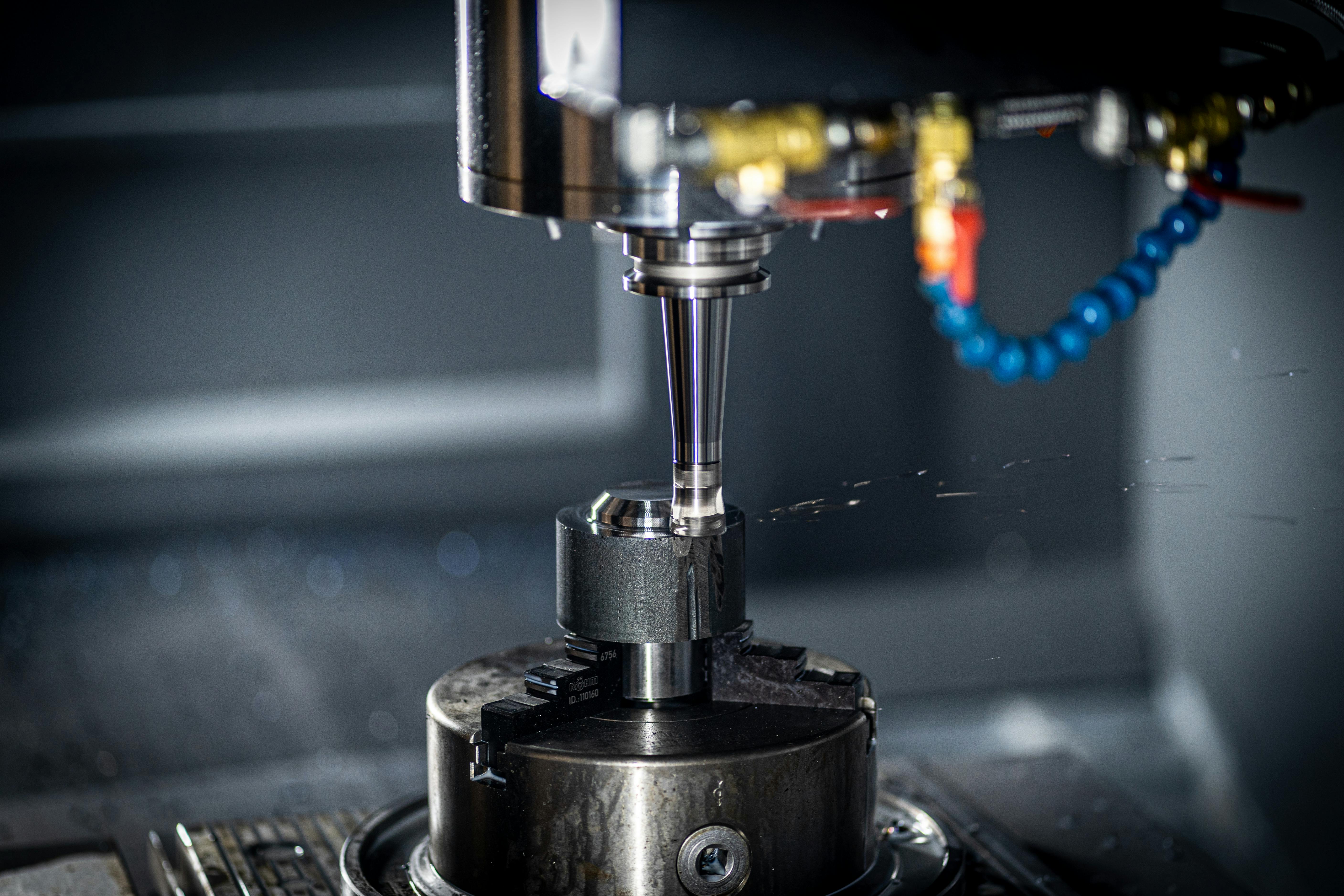
How Much Does CNC Machining Cost? What Drives Your Quote

If you have sent the same drawing to three CNC machining suppliers, you have probably received three very different prices — and wondered which one to trust. That is normal. A CNC quote is not a catalogue price. It is a calculation built from your drawing, and every line on that drawing moves the number.
This guide explains what actually drives the cost of a custom CNC machined part, so you can read a quote line by line, avoid paying for precision you do not need, and send an RFQ that gets you a comparable, accurate price. At Golden Rainbow, we quote the same way: standard tolerance ±0.05 mm, key features up to ±0.01 mm subject to drawing review, from 1 piece, with prototypes in 3–7 working days and production in 10–15 working days.
Why the Same Drawing Gets Different Quotes
A quote has four layers, and suppliers weigh them differently:
- Setup and programming — CAM programming, fixturing, first-article setup. This is mostly fixed per order, so it dominates the unit price on small batches and almost disappears on large ones.
- Machining time — how long the part is actually on the machine. Complex geometry, hard materials and tight tolerances all add time.
- Material — the raw stock, including the waste cut away around the part.
- Finishing and inspection — surface treatment, deburring, measurement and documentation.
Two suppliers can honestly arrive at different totals because one has a 5-axis mill that finishes your part in one setup while the other needs three setups on a 3-axis machine — or because one included inspection and the other did not. When quotes differ widely, the first question is not "who is cheapest?" but "what is included in each price?"
1. Material: The Choice You Make Before Machining Starts
Material affects cost three ways: the price of the stock itself, how fast it cuts, and how much tool wear it causes.
- Aluminium (6061, 7075) is usually the most economical to machine: it cuts fast, tools last longer, and stock is widely available. 7075 is stronger and harder than 6061, and costs more both as material and in machining time.
- Stainless steel (304, 316) costs more to machine than aluminium. It is harder, generates more heat, and wears tools faster. 316, with its better corrosion resistance for medical and semiconductor parts, typically costs more than 304.
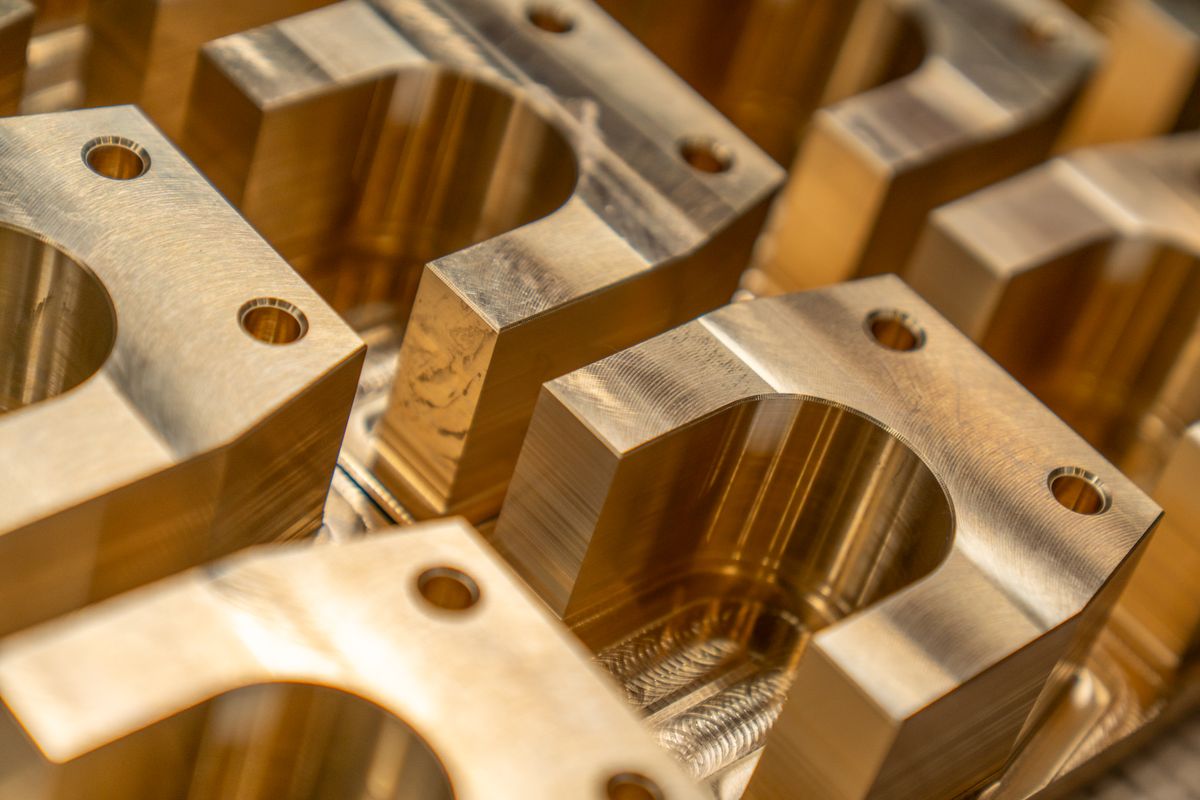
- Brass and copper machine well and give excellent surface finish, but the raw material price is higher than aluminium, and copper in particular needs care to avoid burring.
- Tool steel and titanium alloy are the most expensive to machine in our range. Titanium is strong, light and corrosion-resistant — which is why aerospace and medical buyers ask for it — but it cuts slowly, needs rigid setups and wears tools quickly. Expect a titanium part to cost noticeably more than the same geometry in aluminium, even before material price is counted.
One practical rule: do not over-specify material. If 6061 aluminium meets the strength and environment requirements, paying for 7075 or titanium adds cost at every step — material, machining time and tooling — for no functional gain. State the material grade on the drawing, and if a substitute is acceptable, say so in the RFQ.
2. Tolerance: The Biggest Cost Lever You Control
Tolerance is usually the single largest cost lever, and the one buyers over-specify most often.
A standard tolerance of ±0.05 mm can be held on most features with normal machining, normal inspection and normal speed. Tightening a feature to ±0.01 mm is a different job: slower feeds, more careful fixturing, temperature-stable measurement, and often a separate finishing pass. The cost does not rise in proportion — it can jump several times over for a single feature.
So apply tight tolerances only where they matter:
- Tight (±0.01 mm): bearing bores, sealing faces, mating interfaces, and features that control assembly fit. These are the features we review drawing by drawing before confirming ±0.01 mm.
- Standard (±0.05 mm): most general dimensions, non-critical holes, overall sizes.
- Loose (±0.1 mm or open): cosmetic edges, clearance features, anything that does not touch another part.
Do not put ±0.01 mm on every dimension "to be safe". A drawing with tight tolerances everywhere reads as a part that will be slow, expensive and risky to make — and suppliers will price it that way. If you are unsure which features are critical, mark them, and let the supplier confirm the rest.

3. Geometry and Process: When 5-Axis Saves Money
The shape of the part decides which process — and how many setups — it needs.
- Simple prismatic parts with features on one or two faces are cheapest on 3-axis milling.
- Parts with features on several faces may need 4-axis work or multiple 3-axis setups. Every extra setup adds handling time, re-fixturing and a chance of misalignment.
- Complex curved surfaces, angled features and undercuts are where 5-axis milling earns its cost. A 5-axis machine can reach several faces in one setup, which often makes a complex part cheaper overall than making it in three setups on a simpler machine — even though the 5-axis hourly rate is higher. That is why we list 3-axis, 4-axis and 5-axis milling together: the right axis count is the one that finishes your part in the fewest setups.
Other geometry costs to watch: deep, narrow pockets (long tools, slow cutting), thin walls (vibration, deflection, slower feeds), sharp internal corners (a round cutter cannot make a sharp corner — a small radius or an EDM step is needed), and very small features on a large part.
4. Quantity: Why 1 Piece and 500 Pieces Are Different Products
Setup and programming are fixed costs. On a 1-piece prototype, you pay all of them. On 500 pieces, the same setup cost is spread across 500 parts, so the unit price falls sharply — even though material and machining time per part barely change.
That is also why the cheapest unit price is not always the cheapest order. A supplier who charges a separate setup fee and a low unit price may be cheaper at 500 pieces and more expensive at 10. Ask for the quote broken down — setup, unit price, material, finishing — and compare at your actual quantity, not at the quantity in someone else's example.
Golden Rainbow takes orders from 1 piece, so prototypes and small batches are quoted the same way as production: the setup is real, it is shown in the price, and it falls per unit as quantity rises.
5. Surface Finish and Post-Processing
A standard machined finish, typically Ra 1.6, is included in normal machining. Going finer — Ra 0.8 or below — needs additional passes or polishing, and adds time and cost. Going coarser is usually free, but check it still meets the function.
Added processes stack up quickly: anodising, plating, passivation, bead blasting, painting, heat treatment. Each one is a separate step, often with its own lead time and minimum charge. Specify only the finish the part actually needs: a housing that sits inside an enclosure rarely needs the same finish as a visible medical device component. And note the finish on the drawing, with the standard it refers to — "anodised" alone leaves the colour, thickness and masking open to interpretation.
6. Inspection and Documentation
Basic dimensional inspection is part of a normal order. What adds cost is documentation: first-article inspection reports, material certificates, full CMM reports, and PPAP-style packages. These take measurement time and paperwork, and on small orders they can be a visible share of the price.
If your industry requires them — medical, aerospace and semiconductor usually do — say so in the RFQ, and say which documents you need. If you only need a material certificate, do not pay for a full inspection package, and vice versa. Ask what inspection is included as standard, so you are comparing like with like.
7. Lead Time: What You Pay to Go Faster
Standard lead time at Golden Rainbow is 3–7 working days for prototypes and 10–15 working days for production, depending on quantity, complexity and surface treatment. Rush orders are possible, but they cost more: they displace other work, need overtime or dedicated machine time, and leave less room to recover from a tool or material problem.
The cheapest way to get a fast delivery is to ask early and send complete information. An RFQ with a STEP file, a dimensioned PDF, material grade, quantities, tolerances, finish and inspection requirements can be quoted within 24 hours on business days. An incomplete RFQ cannot — it comes back with questions, and every round of questions costs a day.
How to Compare Quotes Fairly
Before choosing the lowest price, check these five things in every quote:
- Is the material grade stated, or just "aluminium"/"stainless steel"? Grades matter — 6061 and 7075 are not interchangeable on price or strength.
- Which tolerances are guaranteed, and which are "to be confirmed"? A low price that quietly drops your tightest tolerance is not the same part.
- What is included — setup, finishing, inspection, packaging, shipping? A quote that excludes finishing is not cheaper; it is incomplete.
- What is the lead time, and from when? From order confirmation and drawing approval, or from payment? Those are different dates.
- What happens if a part fails inspection? Rework, remake, or "buyer pays"? Know before you order.
A quote that answers all five is worth more than a cheaper one that answers none of them.
How to Get an Accurate Quote From Us
Send the following, and we reply within 24 hours on business days:
- A 3D file (STEP/STP preferred) and a 2D drawing (PDF) with dimensions
- Material grade — for example, aluminium 6061, stainless steel 316, or titanium alloy
- Quantity, and whether this is a prototype or a production run
- Critical tolerances and GD&T, marked on the drawing
- Surface finish and any post-processing
- Inspection or documentation requirements, and your delivery date and destination
Send drawings by email to stellachen@goldenrainbow.com — our quote form currently takes drawings by email, so attach STEP/STP, PDF or DWG files to your message. For a full checklist of what to include, see our guide How to Get a CNC Machining Quote from China.
Frequently Asked Questions
Q: Why is CNC machining expensive for one piece?
A: Because setup and programming are fixed costs paid once per order. On a single prototype they fall entirely on that part; on a larger batch they are spread across many parts. The machining itself is often the smaller share on a one-off.
Q: Does tighter tolerance always cost more?
A: Almost always, and steeply at the tight end. Moving a feature from ±0.05 mm to ±0.01 mm can mean slower cutting, extra finishing passes and more inspection. Keep tight tolerances on the features that control fit and function, and leave the rest at standard tolerance.
Q: Is 5-axis machining more expensive?
A: Per hour, yes. Per part, not necessarily. If 5-axis milling finishes a complex part in one setup instead of three, the total cost can be lower than making it on a 3-axis machine. The right question is how many setups your geometry needs.
Q: Can I reduce cost without changing the design?
A: Often, yes: relax non-critical tolerances, accept a standard Ra 1.6 finish, choose a more machinable material grade where the function allows it, and order the quantity you actually need in one batch rather than in several small ones.
Q: How long does a quote take?
A: With complete drawings and information, we reply within 24 hours on business days. Incomplete RFQs take longer, because we have to ask for the missing material, tolerance or quantity information first.
The Short Version
Cost is driven by material, tolerance, geometry, quantity, finish, inspection and lead time — in roughly that order for most parts. The most expensive mistakes are specifying a harder material than needed, tightening every tolerance, and sending an incomplete RFQ that has to be quoted with a risk margin. Send complete information, mark only the features that are truly critical, and compare quotes on what is included, not just on the bottom line.
Ready for a price on your part? Request a quote — attach your STEP and PDF drawings by email, and we will reply within 24 hours on business days.