01 / Drawing Review1
Revision and Feature Alignment
Confirm the current drawing, model, revision and applicable customer requirements before releasing the manufacturing plan.
Revision / geometry / requirements
SWISS MACHINING SERVICES
Golden Rainbow supports small-diameter, slender and feature-dense rotational components through Swiss-type, bar-fed machining. Drawing, material, geometry, operation sequence, support strategy and inspection requirements are reviewed together before capability is confirmed.
Share the current drawing and revision, including critical diameters, lengths, feature relationships, material condition, surface requirements and the required inspection method.
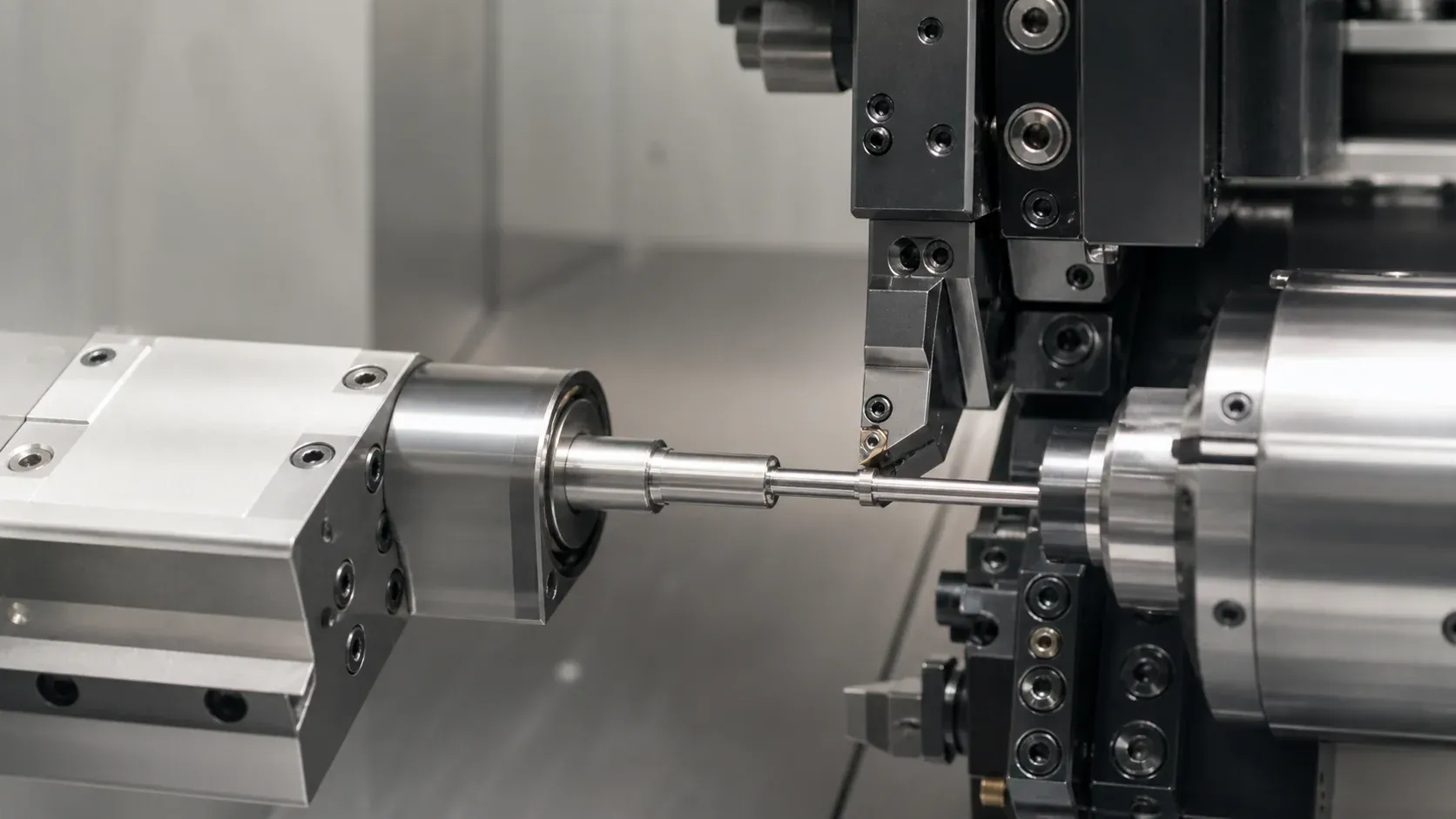
Micro shafts, pins, sleeves, bushings and feature-dense turned parts for OEM assemblies.
Swiss-type machining supports small precision rotational components through controlled bar feeding and close support near the cutting zone.
Drawing-led Swiss-type review
PROCESS OVERVIEW
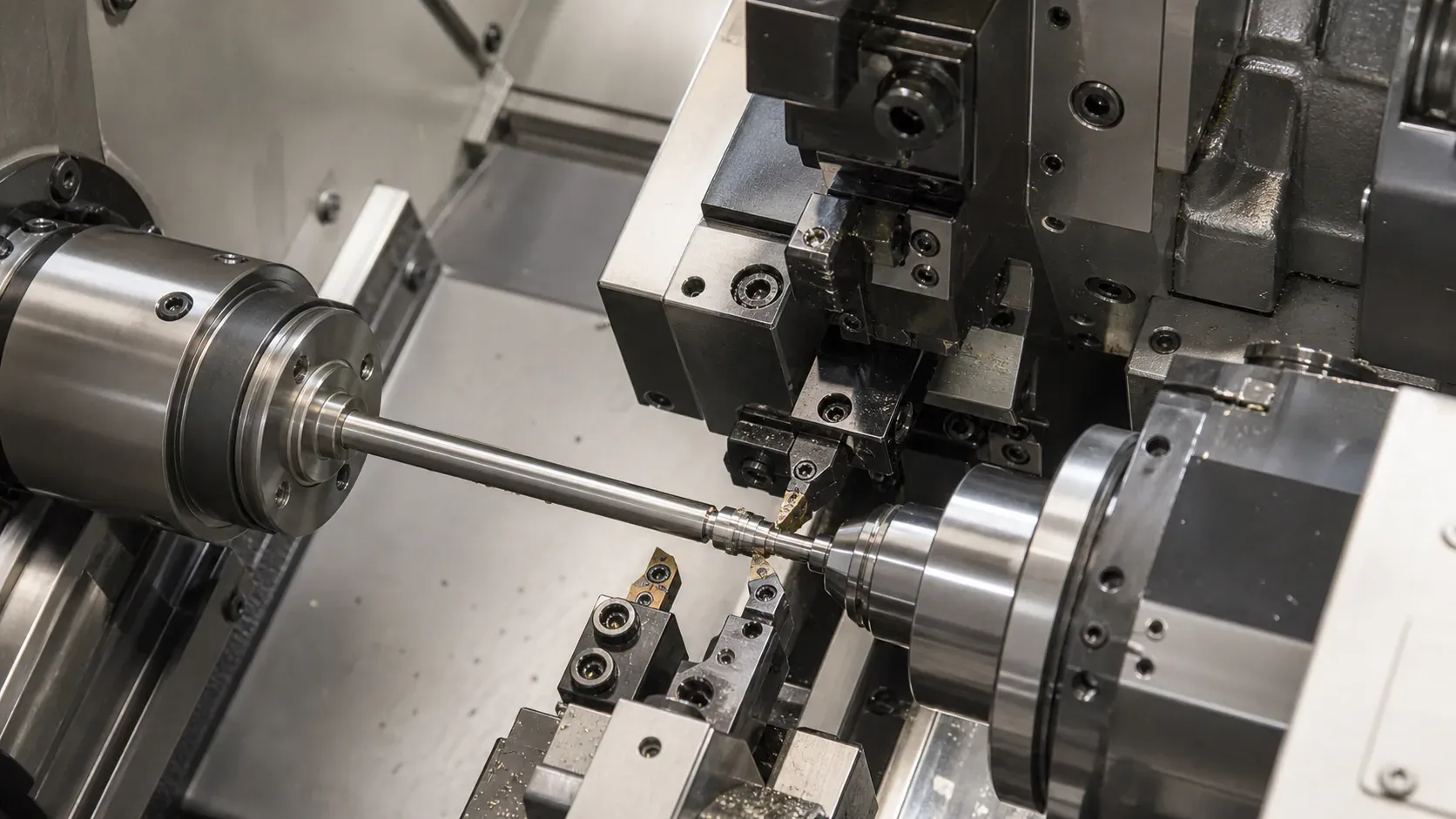
Swiss-type machining feeds bar stock through a sliding headstock and guide bushing so the workpiece remains closely supported near the cutting zone. This process is suited to small-diameter precision rotational components and can coordinate turning, drilling, grooving, threading and other supported operations within one planned sequence. Golden Rainbow confirms the applicable operation combination only after reviewing part geometry, material, tool access, setup strategy and inspection requirements.
Bar-stock condition, cut length, part transfer needs and the complete operation sequence are reviewed from the current drawing.
Close support near the cutting zone can help manage slender geometry while tool access and feature relationships are planned together.
Turning, drilling, grooving, threading and other supported operations are combined only where the approved equipment, setup and drawing requirements allow.
APPLICATIONS
Capability depends on component geometry, material, overall size, bar-stock condition, setup requirements, tooling access and the agreed inspection method. Critical features are reviewed as connected requirements rather than isolated dimensions.

Reviewed for diameter relationships, straightness intent, end features, surface condition and measurement access.
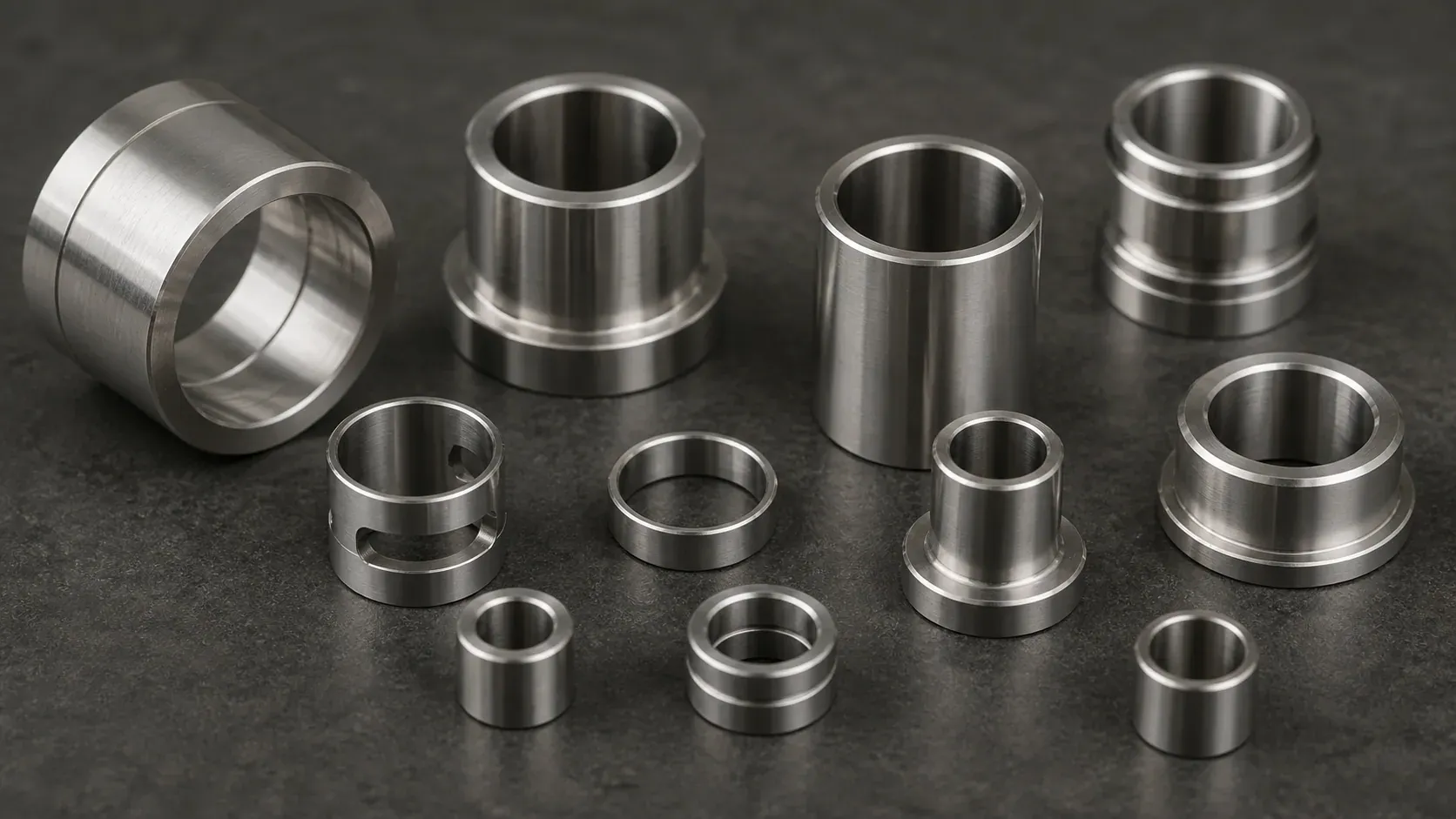
Evaluated for bore-to-outer-diameter relationships, wall condition, length, edge requirements and inspection planning.
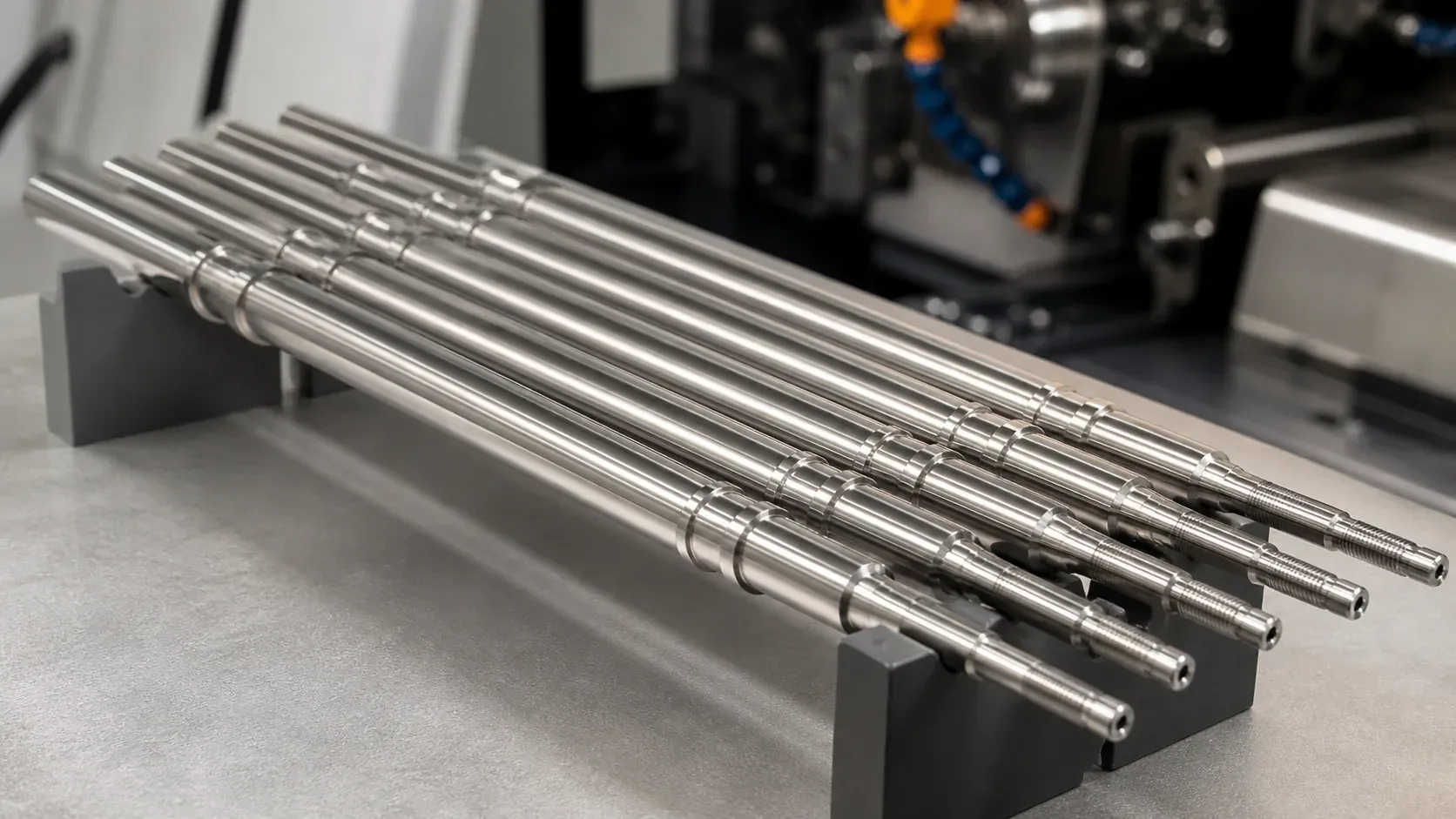
Assessed for length-to-diameter relationship, guide-bushing support, deflection risk, tool access and handling through production.

Diameters, grooves, threads, cross features and supported secondary operations are coordinated through setup and inspection planning.
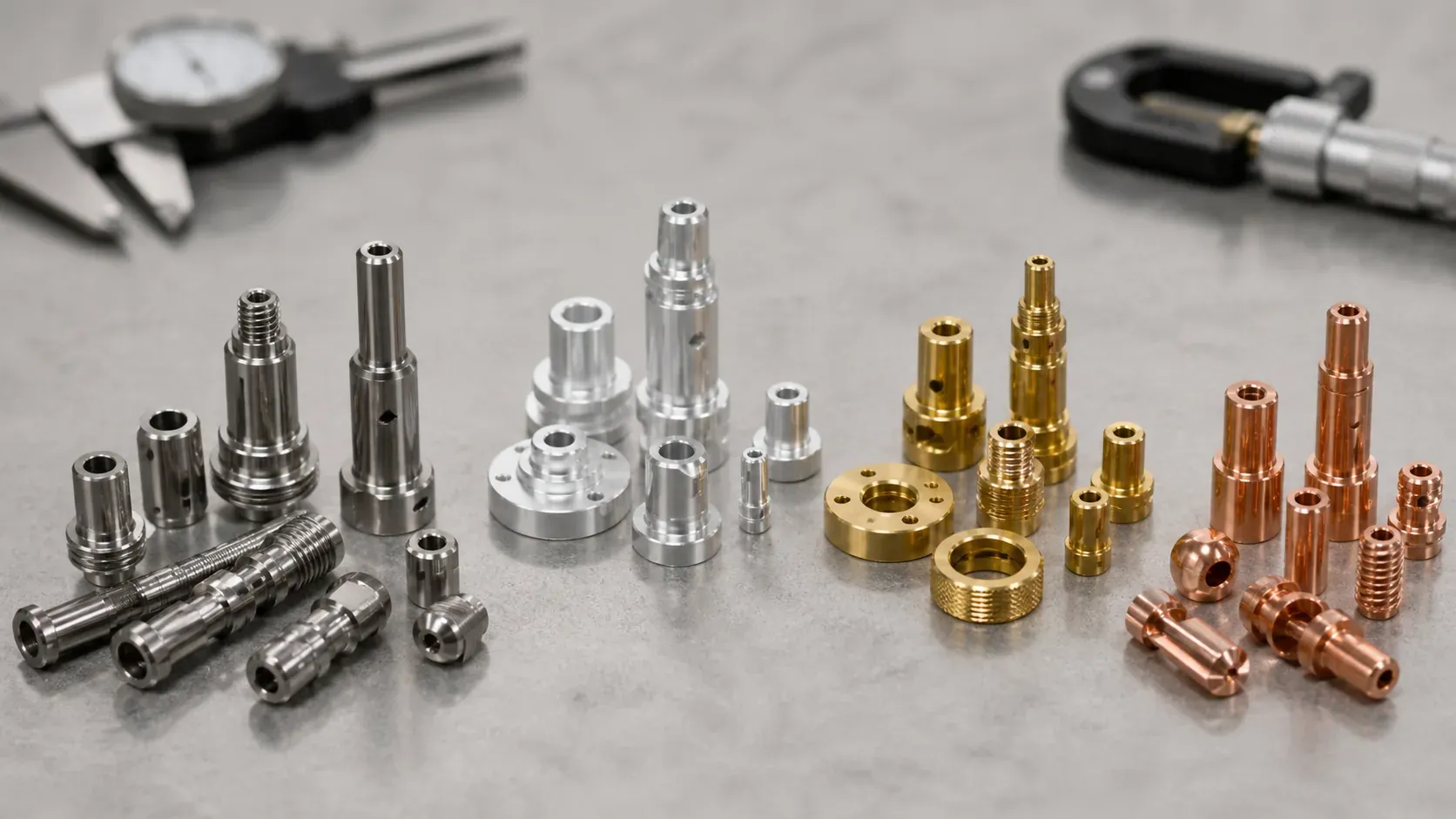
MATERIALS AND PRECISION CONTEXT
Material grade, bar-stock condition, component length, wall thickness and feature density can influence cutting behavior, guide-bushing support, tool wear, burr formation and dimensional stability. Tolerance feasibility is reviewed against the complete drawing and selected inspection method rather than stated as a universal value.
Grade, stock condition, heat-treatment state, feature density and surface requirements are reviewed for each component.
Material condition, burr sensitivity, surface protection and small-feature requirements are evaluated together.
Capability depends on geometry, material behavior, bar-stock condition, size, setup strategy and inspection method.
QUALITY CONNECTION
Quality planning begins with the approved drawing and acceptance criteria. Revisions, critical diameters, lengths, feature relationships, surface requirements, material and requested records are reviewed before production.
Confirm the current drawing, model, revision and applicable customer requirements before releasing the manufacturing plan.
Verify initial output and monitor selected dimensions and feature relationships at planned production stages.
Verify the completed component against the drawing, order requirements and agreed documentation scope.
START YOUR SWISS MACHINING REVIEW
Share the drawing and project requirements so Golden Rainbow can evaluate geometry, material, size, support strategy, feature sequence and inspection needs as one manufacturing scope.
Current drawing and revision
Identify critical diameters, lengths, feature relationships and controlled data requirements before submission.
Grade and condition
State the exact specification, stock condition and any secondary processing requirements.
Prototype and repeat needs
Provide requested quantities, annual volume context and the target delivery requirement.
Critical features and records
Define the acceptance criteria, inspection scope and required documentation.