01 / Drawing Review1
Revision and Profile Alignment
Confirm the current drawing, model, revision and applicable customer requirements before releasing the EDM plan.
Revision / profiles / requirements
EDM MACHINING SERVICES
Golden Rainbow supports wire-cut EDM for fine profiles, narrow slots, intricate contours and precision tooling features in electrically conductive materials. Drawing, material condition, workpiece thickness, feature requirements and inspection method are reviewed together before capability is confirmed.
Share the current drawing and revision, including material condition, critical profiles, corner intent, workpiece thickness, surface expectations and inspection criteria.
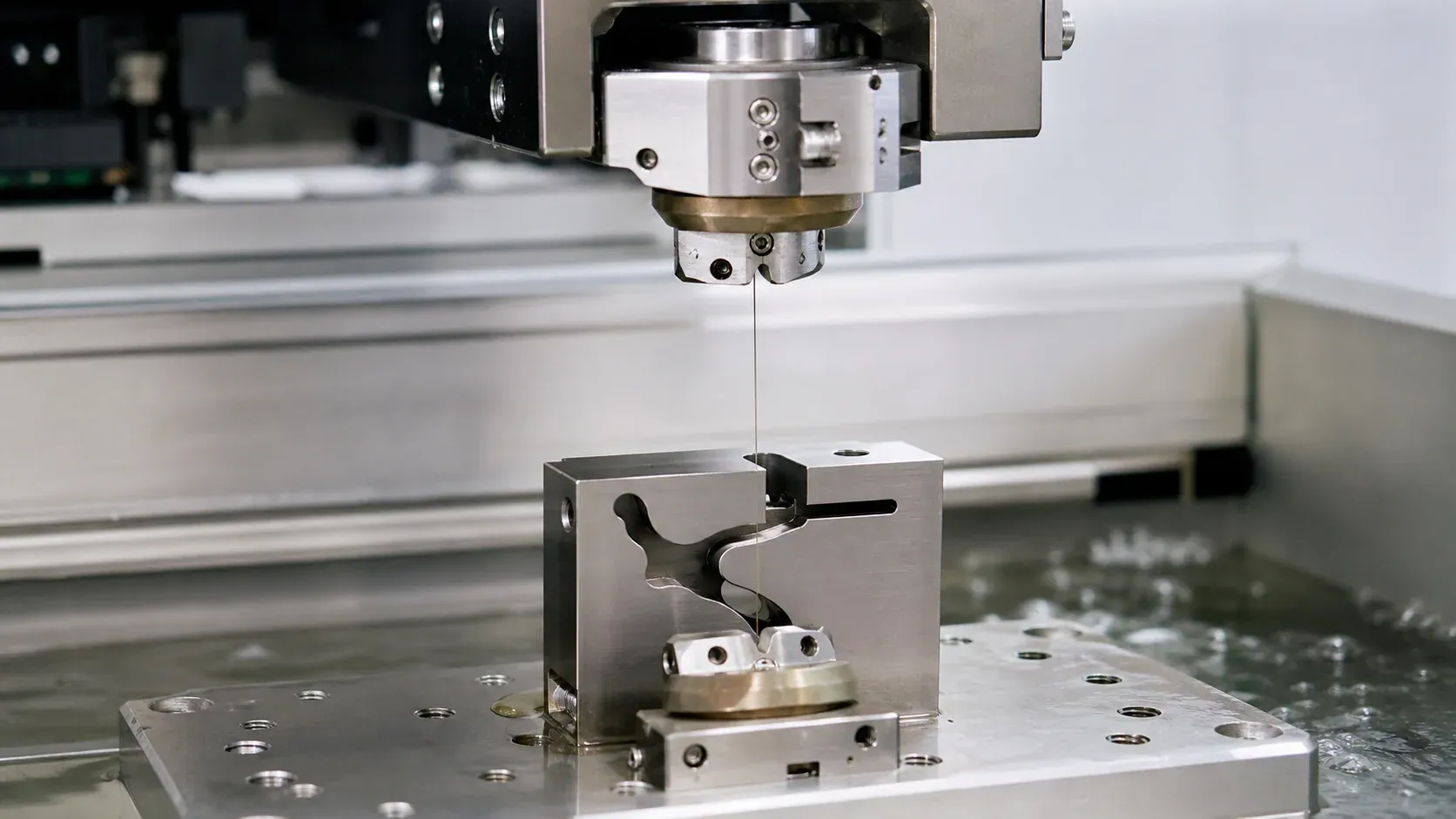
Tooling inserts, narrow slots, complex profiles and detailed conductive components for OEM applications.
Wire-cut EDM forms detailed profiles in conductive workpieces without conventional cutting contact.
Drawing-led Wire EDM review
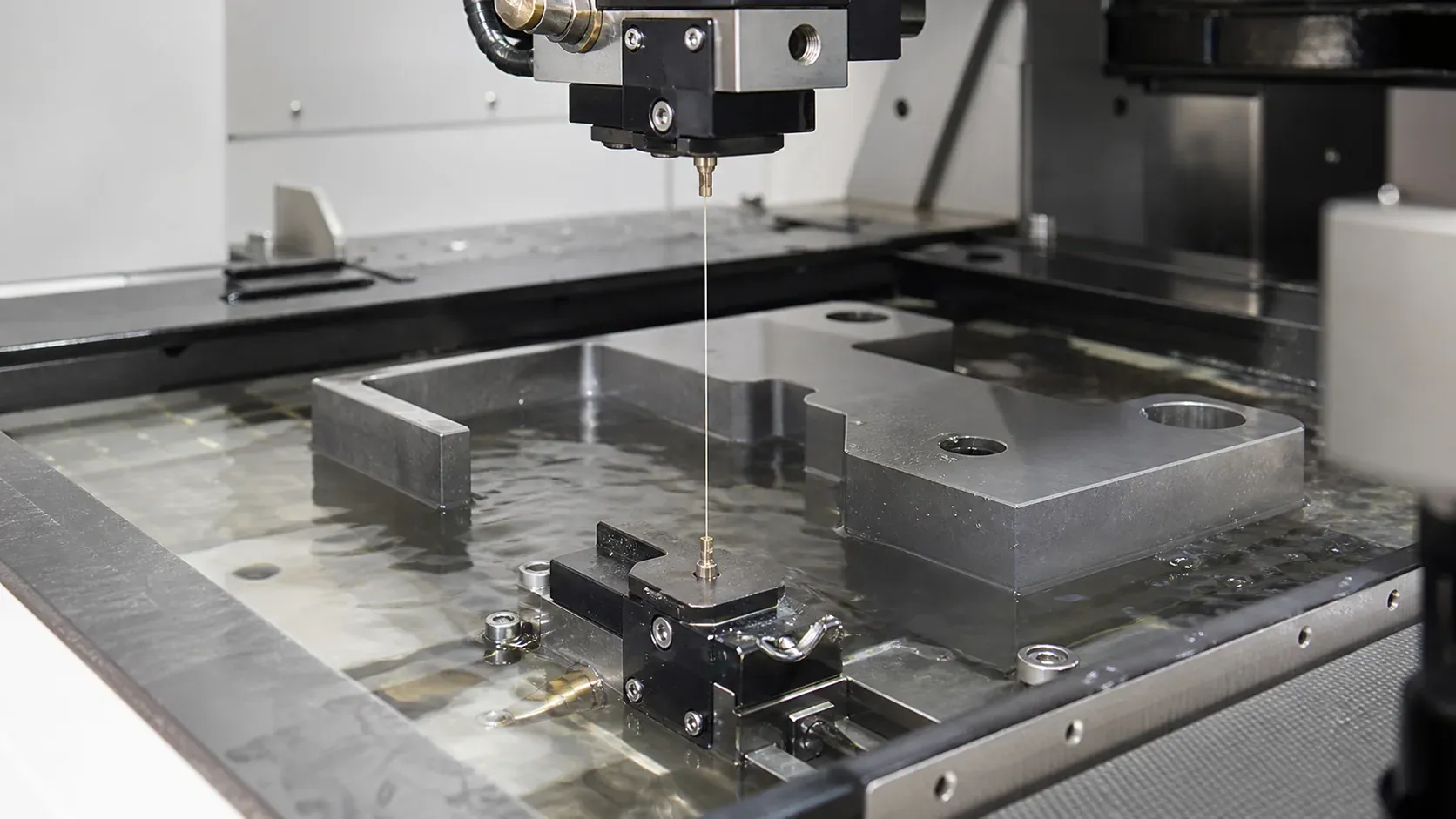
PROCESS OVERVIEW
Wire-cut EDM uses a continuously traveling thin electrode wire and controlled electrical discharges to remove material from an electrically conductive workpiece. The cutting zone is managed in dielectric fluid while the programmed wire path forms profiles, slots and complex contours without conventional cutting contact. This can be relevant to hardened or difficult-to-machine conductive materials when geometry, access and inspection requirements suit the process.
The current drawing, revision, start features, contour sequence and corner intent establish the technical baseline.
Material conductivity, heat-treatment condition, workpiece thickness and stability are evaluated before routing.
Profile relationships, edge requirements and measurement access are considered together before the cut and inspection plan is confirmed.
APPLICATIONS
Capability depends on electrical conductivity, material condition, geometry, workpiece thickness, wire access, feature requirements and the agreed inspection method. Accuracy and finish are confirmed only after the complete project specification is reviewed.
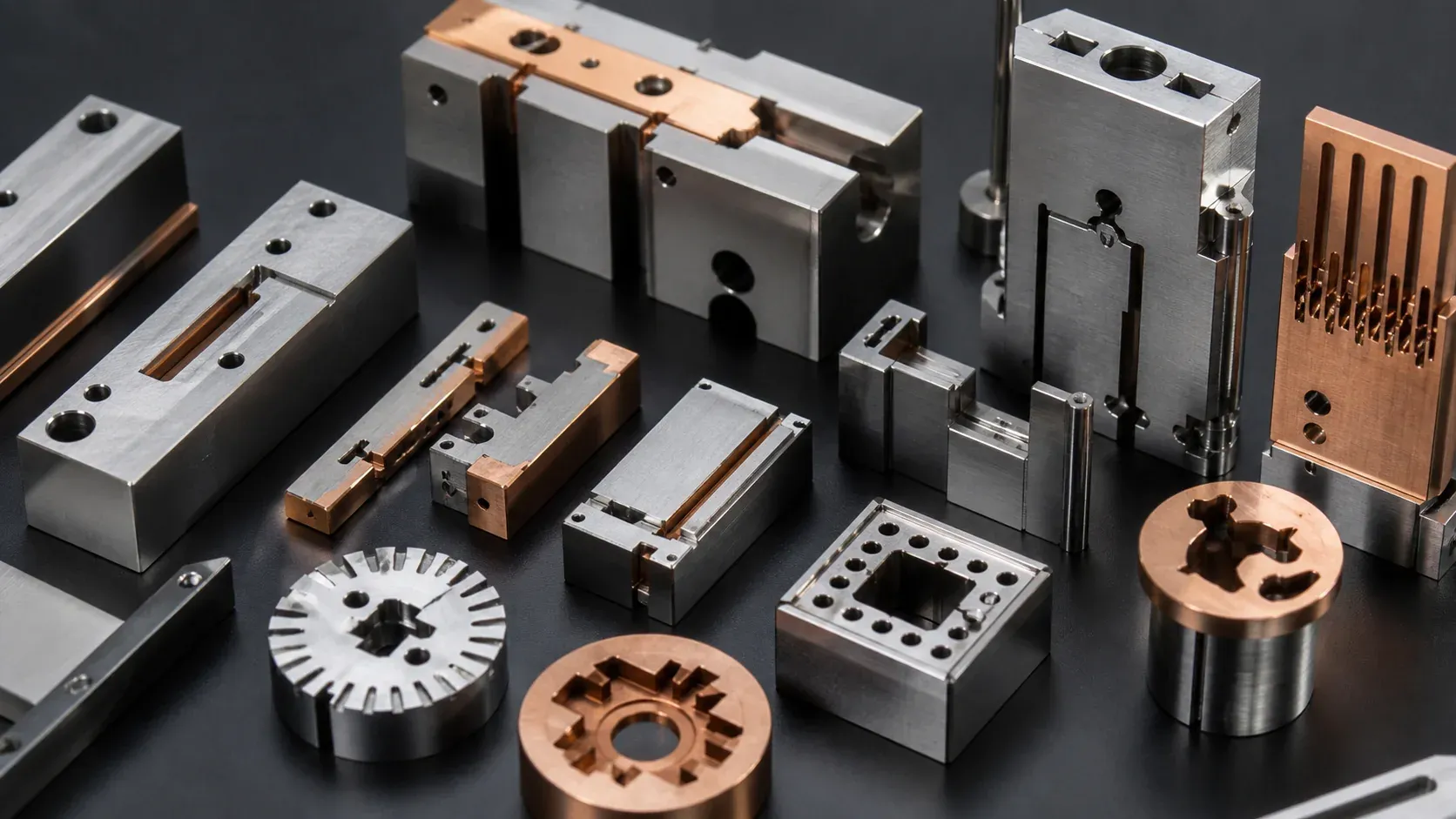
Detailed external profiles are reviewed for contour continuity, corner intent, workpiece support and measurement access.
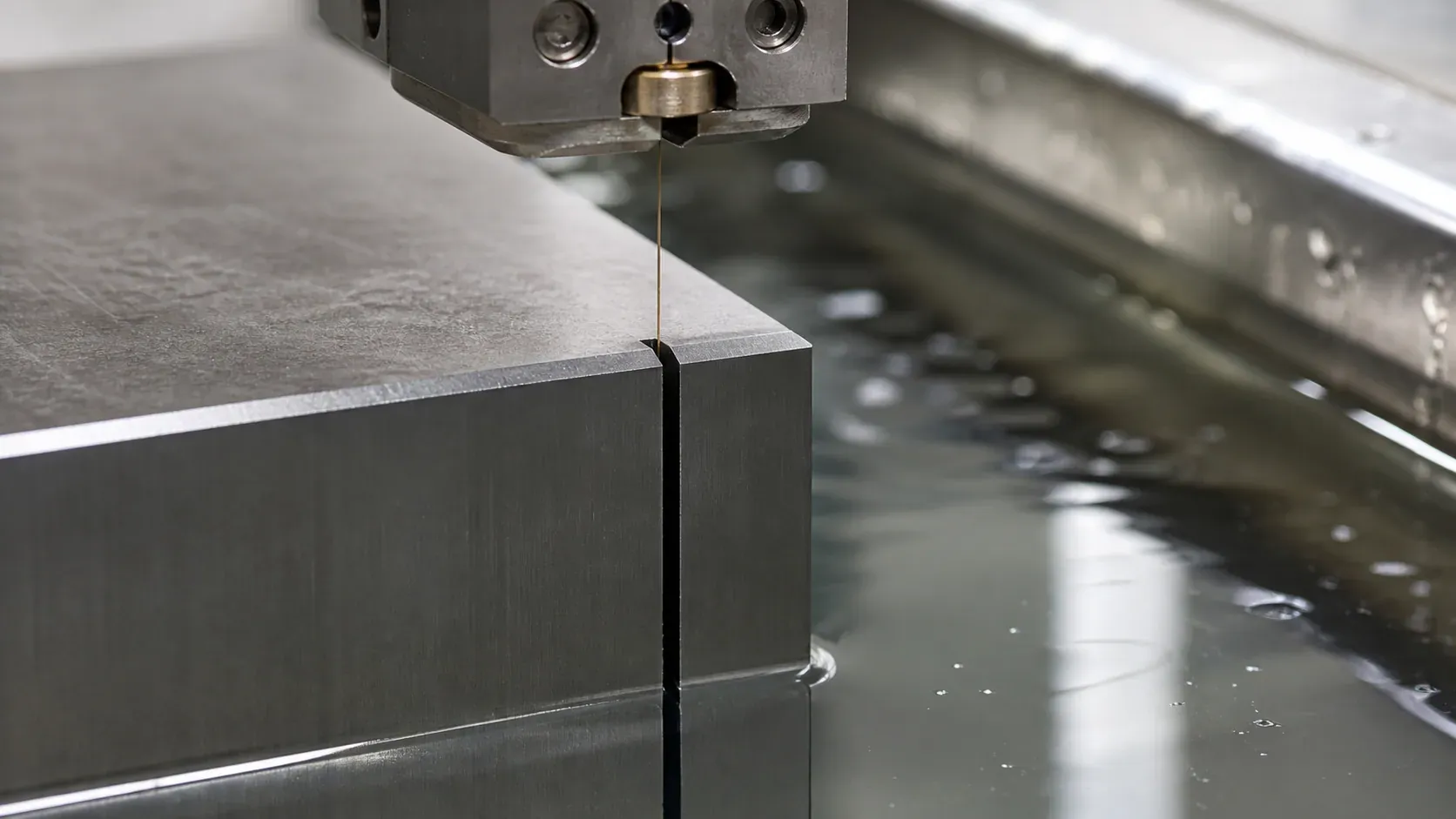
Slot geometry, wire-entry strategy, workpiece thickness, edge condition and inspection approach are evaluated together.
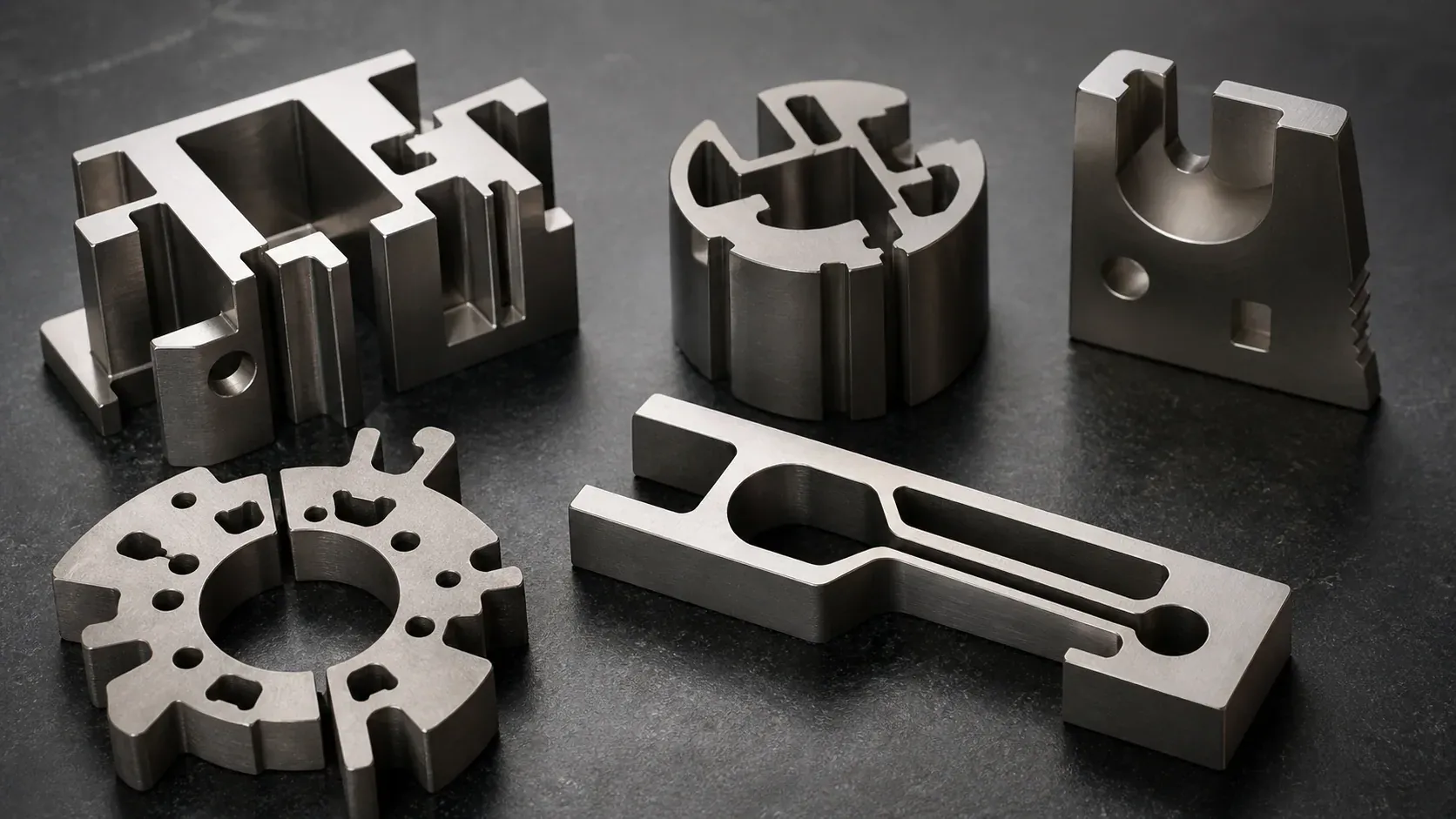
Complex wire paths are assessed against material condition, cut sequence, part stability and the required verification method.
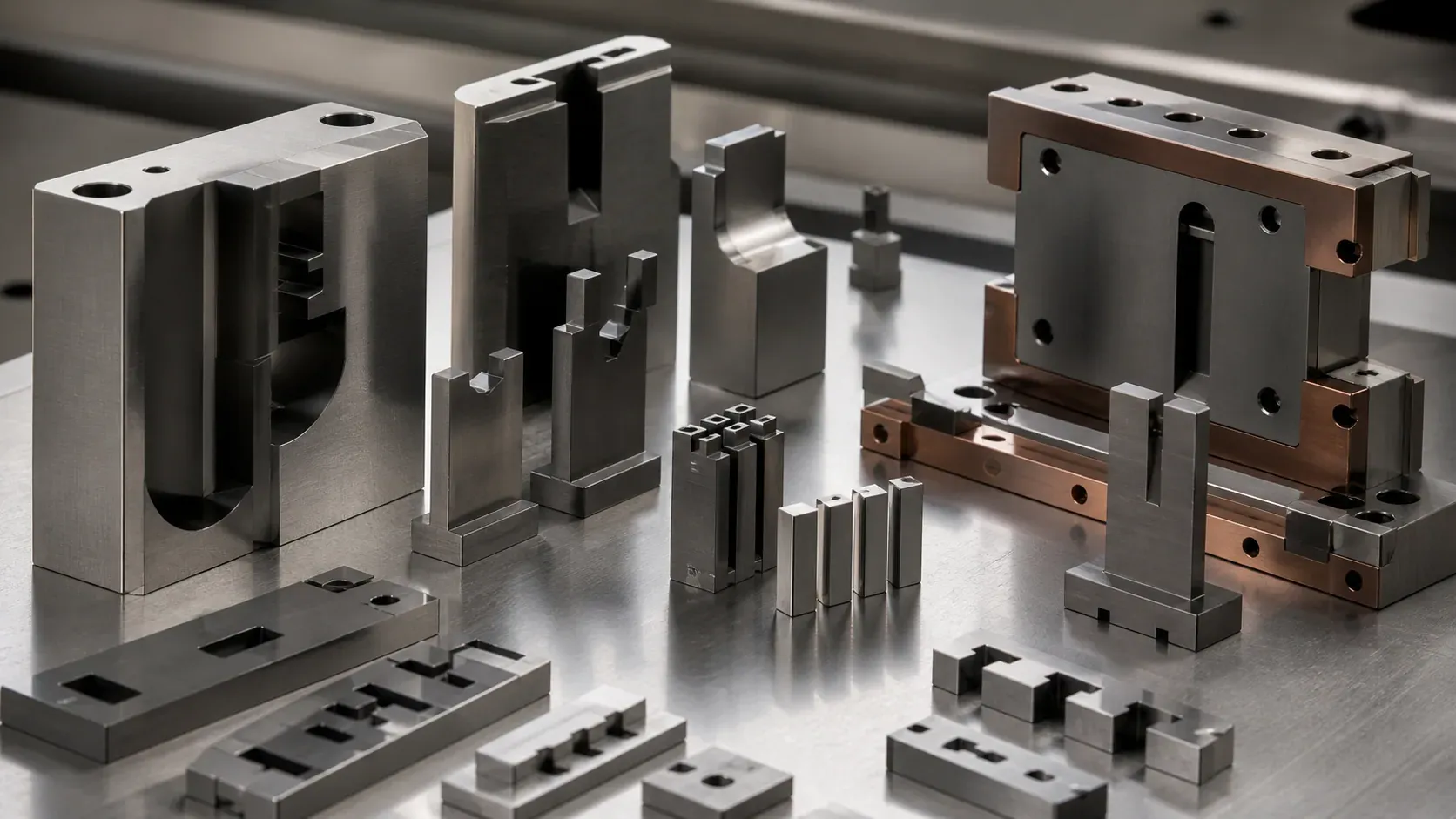
Precision inserts and conductive tooling components are reviewed for profile relationships, corner intent and functional interfaces.
MATERIALS AND PRECISION CONTEXT
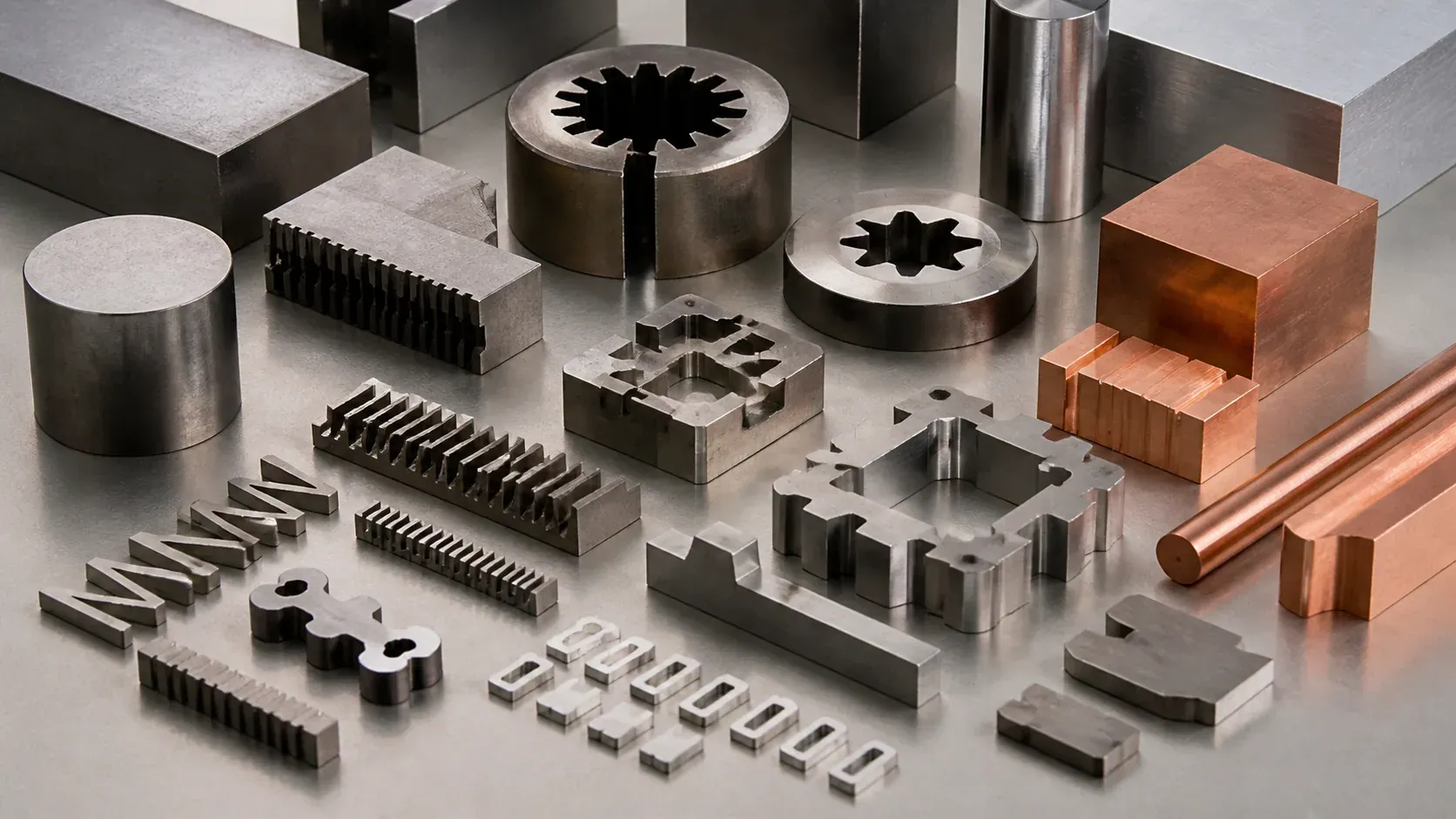
Wire-cut EDM requires an electrically conductive workpiece. Material grade, heat-treatment condition, thickness, geometry and residual stress can influence process stability, cut strategy, edge condition and inspection planning. Project-specific accuracy and surface expectations are reviewed rather than stated as universal values.
Grade, heat-treatment condition, wire access, profile geometry and surface requirements are reviewed for each component.
Material condition, workpiece stability, edge requirements and feature accessibility are evaluated together.
Capability depends on conductivity, material condition, geometry, thickness, feature requirements and inspection method.
QUALITY CONNECTION
Quality planning begins with the approved drawing and acceptance criteria. Revisions, profile relationships, corner intent, surface requirements, material condition and requested records are reviewed before production.
Confirm the current drawing, model, revision and applicable customer requirements before releasing the EDM plan.
Verify initial output and monitor selected profiles and feature relationships at planned process stages.
Verify the completed component against the drawing, order requirements and agreed documentation scope.
START YOUR EDM REVIEW
Share the drawing and project requirements so Golden Rainbow can evaluate material, geometry, thickness, feature intent, process access and inspection needs as one manufacturing scope.
Current drawing and revision
Identify critical profiles, corner requirements, surface expectations and controlled data requirements.
Grade and condition
State the exact conductive material specification, heat-treatment condition and stock form.
Thickness and feature intent
Provide the component thickness, required profiles, slots and relevant functional interfaces.
Critical features and records
Define the acceptance criteria, inspection scope and required documentation.