Process1
3, 4 and 5-axis milling, CNC turning and Swiss-type turning
5-axis milling only
CNC Aluminum Parts
Golden Rainbow machines custom aluminum parts in Shenzhen by 3, 4 and 5-axis milling, turning and Swiss-type turning, from a single prototype to production runs. Standard tolerance is ±0.05 mm, samples take 3-7 working days, and every quote is reviewed by an engineer within one working day.
Drawings can also be emailed to stellachen@goldenrainbow.com. Please state the grade and quantity with the drawing — it helps us quote accurately the first time.
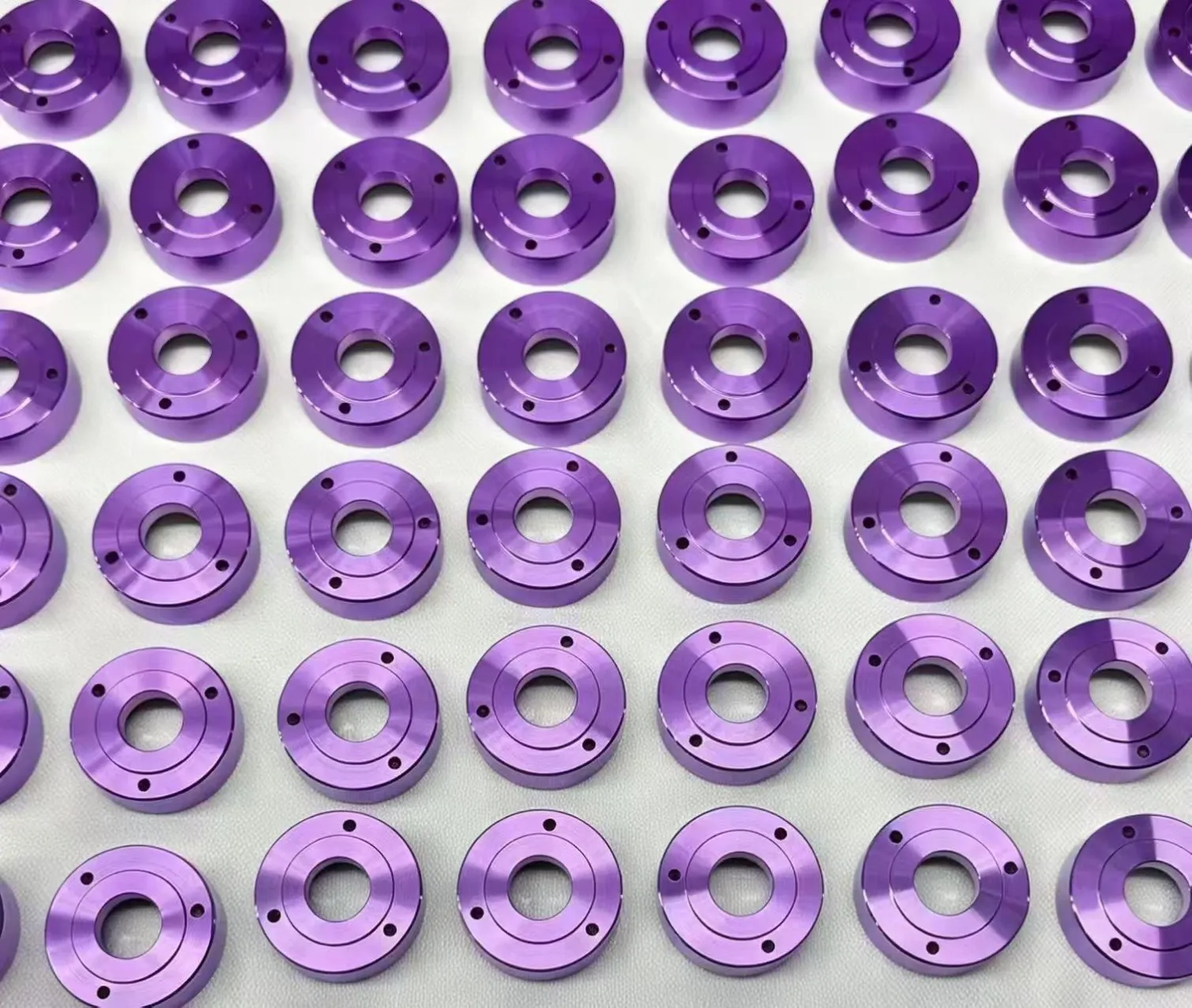
anodised aluminium parts
If your drawing already names the grade — 6061, 7075, or another aluminium grade — this page tells you what Golden Rainbow machines in that material, which route fits your part, and what to send for an engineer-reviewed quote.
Aluminium parts are the most common work in the shop: housings, brackets, rings, discs and fittings, from one piece to production runs.
The grades below are the aluminium grades most commonly machined — 6061 and 7075 are the two grades buyers ask for most often, and the grade on your drawing is what an engineer reviews before confirming material, process and price.
Both are listed here as commonly machined grades, confirmed at drawing review; they are not a stock list.
If your drawing specifies a different grade, send it anyway: the review confirms whether that grade is machinable here before quoting, rather than substituting another grade without your agreement.
6061 is the workhorse aluminium alloy for machined parts: good machinability, good corrosion resistance, weldable, and strong enough for most housings, brackets and fittings.
It is the usual first choice when the part does not need the highest strength — the grade most drawings name when no special property is required.
6061-T6 is the temper most often specified for machined parts.
7075 is the high-strength aluminium alloy, roughly twice the strength of 6061, used where a part must carry load in a small envelope — structural brackets, high-stress fittings and parts that would otherwise need steel.
It is harder on tools and less corrosion-resistant than 6061, so it costs more to machine and is usually chosen only where the strength is genuinely needed.
If your part is 7075, state the temper (for example 7075-T6) on the drawing: the temper is part of the specification, not an assumption.
No stock promise is made on this page. We do not claim to hold either grade in stock, and we do not promise material certificates as standard.
If your order needs a material certificate, say so at enquiry stage so it can be agreed in the quotation.
Housings are the most common aluminium work: enclosures and shells where a milled body, a turned bore and a hole pattern must stay in position relative to one another.
Brackets form a second group — light, stiff parts where aluminium's weight saving is the point, machined from plate or block with milled faces and drilled holes.
Rings and discs form a third group: turned aluminium parts with milled details, including the anodised rings and discs shown on this page.
Fittings complete the set: small threaded and flanged aluminium parts where a turned body carries milled flats or cross-holes.
Other typical work includes panels, covers, sensor housings, parts with fins or pockets, and light structural components for automation equipment.
Parts of this kind are shown on this page only as finished machined parts: a photograph alone cannot establish a part's grade, industry or use.
Milling is the main route for aluminium housings, brackets and plates: 3-axis milling for flat faces, pockets and hole patterns, 4-axis for parts that need a second face, and 5-axis milling where curved surfaces or angled features would otherwise need several fixtures.
Turning suits aluminium rings, discs, shafts and threaded fittings, and Swiss-type turning suits small-diameter aluminium parts with several features in one pass.
Most aluminium parts need only one of these routes; the drawing review states which route fits your part and why, before quoting.
Aluminium machines fast and holds a good surface straight off the tool, which is why lead times are short — but thin walls and long, flat parts can move as material is removed.
That is why the review checks wall thickness and fixturing before confirming a tolerance, rather than promising the standard figure on every feature.
Parts that need milling and turning together are covered on our CNC Milling and Turning page.
The table below contains figures that are already confirmed or already authorised for general use on the site.
5-axis milling only
typical grades; confirmed at drawing review
subject to drawing review and confirmation
tolerance confirmed per drawing
typical work envelope; final capability confirmed against your drawing
other grades confirmed at drawing review
with material grade, quantity and key tolerances noted
Two rows are industry-typical values filled in at Yu's request: the commonly machined grades (6061 and 7075) and the maximum part size (up to 800 × 500 × 500 mm, a common mid-size vertical machining centre work envelope, shared with the milling-and-turning page).
They are not measured figures for Golden Rainbow's own machines.
6061 / 7075 are the aluminium grades most commonly machined in the trade, and 800 × 500 × 500 mm is a common mid-size vertical machining centre work envelope. Both are included at the site owner's request as typical values, not as measured figures.
Read the tolerance lines together. The tighter figure is not a blanket promise for a whole part: it applies to individual critical features, only where geometry, material and inspection access allow it.
— which is why every drawing with a critical callout is reviewed by an engineer before it is confirmed in a quotation.
Thin-wall aluminium parts are assessed separately at drawing review: removing material from a thin wall can move the part, so the achievable tolerance on a thin wall is confirmed per drawing, not assumed from the standard figure.
Which finishes Golden Rainbow actually offers, and whether they are done in-house or outsourced, is still to be confirmed — until then, no finish is named on this page, and the finish for a part is agreed at quotation stage.
Quality on an aluminium part starts before metal is cut.
Every enquiry drawing goes through an engineer review that checks the grade against the part's requirements, datums, critical tolerances, tool access and inspection access, and any ambiguous feature is raised at quotation stage, not discovered after machining.
During machining, key dimensions are checked as the process proceeds, so drift is caught on the first parts rather than at the end of a batch.
Finished parts receive a final inspection against the drawing before packing and dispatch, and any feature confirmed as critical during review is treated as a critical check.
If inspection shows a problem, the part is held and the cause addressed before anything ships. If your project needs anything specific documented with the delivery, tell us at enquiry stage so it can be agreed in the quotation.
Frequently Asked Questions
The grades most commonly machined are 6061 and 7075 (typical grades; the grade on your drawing is confirmed at review).
If your drawing specifies another aluminium grade, send it: the engineer review confirms whether that grade is machinable here before quoting, rather than substituting a different grade without your agreement.
Choose 6061 when the part needs a general-purpose, corrosion-resistant aluminium at a moderate price — housings, brackets and fittings are the usual cases.
Choose 7075 when the part must carry higher loads in the same envelope and the extra machining cost is justified — structural brackets and high-stress parts are the usual cases.
This is general selection logic; the grade that suits your part, including the temper, is confirmed against your drawing at review stage.
The purple and gold parts shown on this page are our own anodised aluminium work, so an anodised finish on your part is something to discuss at quotation stage — the finish, and whether it is done in-house or outsourced, is agreed there.
We do not quote anodising process parameters or colour codes on this page, and no finish is promised here until it is agreed in the quotation.
The standard tolerance is ±0.05 mm, and critical features can reach ±0.01 mm subject to drawing review and confirmation.
On thin-wall aluminium, removing material can move the part, so the achievable tolerance is assessed separately at drawing review — wall thickness, fixturing and the order of operations are checked before any tolerance is confirmed in the quotation.
The minimum order quantity is 1 piece. Samples normally take 3–7 working days depending on complexity, and production takes 10–15 working days depending on quantity and complexity, with the sample made by substantially the same process as the production parts that follow it.
Send your STEP file and dimensioned PDF to stellachen@goldenrainbow.com, or submit the enquiry through /request-a-quote and email the files straight after.
Please state the grade and the quantity with the drawing — it helps us quote accurately the first time.
An engineer will review the drawing and reply within one working day, with a quotation or with the questions that must be answered before a reliable price can be given.