Milling1
3-axis, 4-axis and 5-axis milling
milling only — no 5-axis turning is claimed
CNC Milling and Turning
Golden Rainbow machines parts that need both milling and turning under one roof in Shenzhen: 3, 4 and 5-axis milling, CNC turning and Swiss-type turning. Keeping both processes in one shop means one tolerance chain, one inspection and one delivery date — from a single piece to production runs.
Send a STEP file and a dimensioned PDF to stellachen@goldenrainbow.com — one drawing, one quote for the whole part.
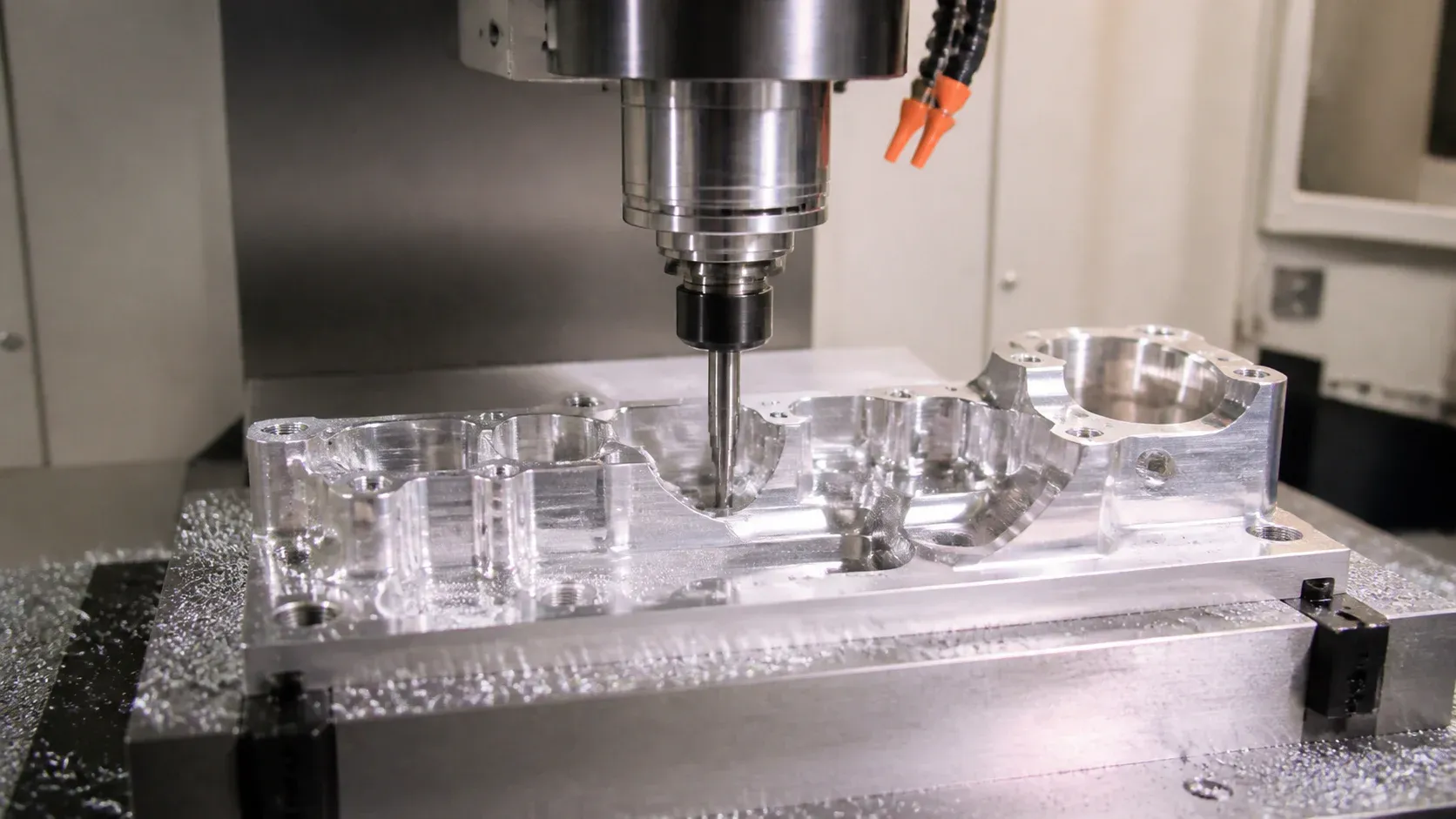
If a part has turned diameters and milled flats, holes or pockets, splitting it between two suppliers means two drawings, two tolerance chains and two delivery dates — and when the parts do not fit at assembly, each supplier points at the other.
This page explains which parts belong in one shop, how the fit is settled before cutting starts, and what to send for a single combined quote.
Many real parts are neither purely milled nor purely turned. A shaft with a flange, a housing with a turned bore and milled mounting faces, a fitting with a turned thread and milled wrench flats, a valve body with a turned seat and cross-drilled ports —
each of these is one part, and it only works when the milled features and the turned features agree with each other.
The combination is common in the work Golden Rainbow already does: automation equipment parts, housings and brackets, shafts and fittings, and small precision components where a turned body carries milled details.
The question is not whether milling or turning is the main process. It is whether the two processes are planned together, against the same datums, before either one starts.
A practical self-check: if your drawing has a turned diameter with a tolerance, and a milled face or hole pattern located from that same diameter, the part needs both processes in one plan.
If the drawing instead shows only flat faces and pockets, milling alone is enough; if it shows only diameters and threads, turning alone is enough.
When milled and turned features are made in different shops, the fit between them is decided twice — once by each shop, against its own setup.
Each shop can be inside its own tolerance and the parts can still fail to assemble, because the error that matters is the one between the two setups, not inside either of them.
In one shop, the tolerance chain is calculated once. The turned diameter and the milled face are located from the same datums on the same drawing review, so the clearance or interference at assembly is settled before machining, not discovered afterwards.
One inspection then checks both sets of features against the same drawing, and one delivery date covers the finished part. This does not make the part cheaper by magic, and it does not remove the need for clear drawings.
What it removes is the handover: no second supplier to brief, no second setup to align, and no argument about whose tolerance caused a misfit. For a buyer, that is the real saving — one order, one contact, one part that fits.
The table below contains figures that are already confirmed or already authorised for general use on the site.
milling only — no 5-axis turning is claimed
subject to drawing review and confirmation
(typical work envelope; final capability confirmed against your drawing)
(typical work envelope; final capability confirmed against your drawing)
(generic term only — no sub-processes listed)
Milled and turned features checked together, not in two separate reports
With material, quantity and tolerances
Read the tolerance lines together. The tighter figure is not a blanket promise for a whole part: it applies to individual critical features, and only after the drawing has been reviewed. The standard figure is the one to plan around when the drawing is first sent.
The 5-axis page lists up to 600 × 500 × 400 mm as an industry-typical reference figure for a medium-size 5-axis mill. That figure is not repeated here; this page uses up to 800 × 500 × 500 mm for general milling (a common mid-size VMC envelope) and up to Ø300 mm for turning,
both industry-typical values filled in at Yu's request and marked as such — not measured figures.
The work starts with the drawing, not with the machine. Send a STEP file and a dimensioned PDF, and state the material, the quantity and the tolerances — including which features must fit together at assembly, and how tight that fit has to be.
The engineer reviews the drawing within one working day and replies with feasibility and a quote; if a tolerance cannot be held the way it is drawn, that is raised at this stage, before any cutting.
Milling and turning are then planned as one route: which features are turned first, which are milled, and which datums both operations share. Features that must align at assembly are machined and checked against the same references, so the fit is built into the plan rather than hoped for at the end.
Before delivery, the part is inspected against the drawing — milled and turned features together, not in two separate reports. If the order also includes sheet metal parts, they are supplied in the same order so the buyer still deals with one supplier and one delivery date.
What this page does not promise: an assembly service. Golden Rainbow machines the parts so they fit at assembly; the assembly itself is the buyer's work unless separately agreed. Do not read this page as an offer to assemble finished products.
Milled and turned parts are machined in aluminium, stainless steel, brass, copper, tool steel and titanium. The choice of material is the buyer's, stated on the drawing; grades are confirmed at the drawing review stage, not assumed from a catalogue list.
Two combinations come up most often. Aluminium is the usual choice where weight matters and the part needs both turned and milled features — housings, brackets and fittings.
Stainless steel is the usual choice where corrosion resistance or strength matters — threaded fittings, flanges and multi-hole components.
Either way, the same rule applies: send the grade with the drawing, and the quote is prepared against that grade.
Surface finish is not promised on this page. Which finishes are actually offered, and whether they are done in-house or outsourced, is still to be confirmed — until then, no finish is named here.
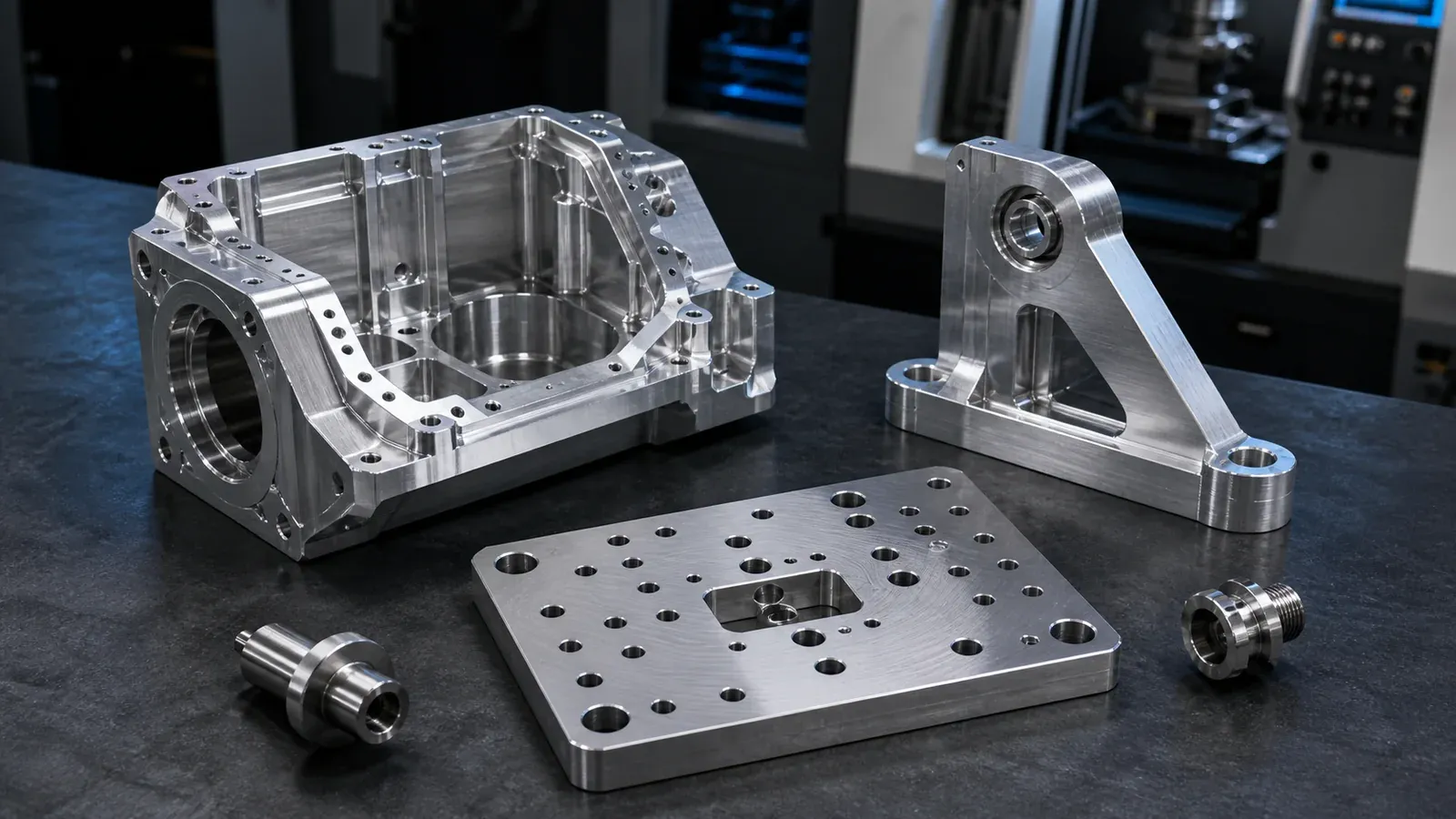
The parts below are types, not customer cases. No customer name, no order quantity and no end use is stated for any of them.
a turned shaft and a milled flange face on the same part, located from one datum.
a milled housing body with a turned bore and milled mounting faces.
a turned thread with milled flats or cross-holes, made in one order.
turned seats and threads with milled ports and faces.
turned bodies with milled details, from a single piece for prototyping.
If your part looks like one of these, the fastest route is the same: send the drawing and state which features must fit together. If it does not look like any of them, send it anyway — the drawing review is the step that decides whether one shop can make it, not the list above.
Finished machined parts
Yes. Send one drawing and one order, and the part is machined in one shop and delivered as one part. The quote covers the whole part, not two separate jobs.
The fit is settled at the drawing review, before machining: the turned and milled features are located from the same datums, and both are inspected against the same drawing. If a tolerance cannot be held as drawn, it is raised at review stage.
Sheet metal fabrication can be supplied in the same order. Only the generic service is offered here; specific sheet metal sub-processes are not listed until confirmed.
The standard tolerance is ±0.05 mm. Critical features can reach ±0.01 mm, subject to drawing review and confirmation. The tighter figure applies to individual features, not to a whole part by default.
Send a STEP file and a dimensioned PDF to stellachen@goldenrainbow.com, or through /request-a-quote. State the material, quantity and tolerances, and which features must fit together. An engineer reviews the drawing and replies within one working day.
Send your drawing and get one quote for the whole part — milled and turned, in one order, from one supplier.
Or email STEP + dimensioned PDF directly to stellachen@goldenrainbow.com. Engineer-reviewed reply within one working day.