CNC Machining
Why Is My CNC Cutting Tool Overheating? (And How to Fix It)
A hot cutting tool means poor finish, lost tolerance, and short tool life. Learn the main causes of CNC tool overheating — speeds, feeds, chips, dull tools, coolant — and how to fix each one.
Introduction
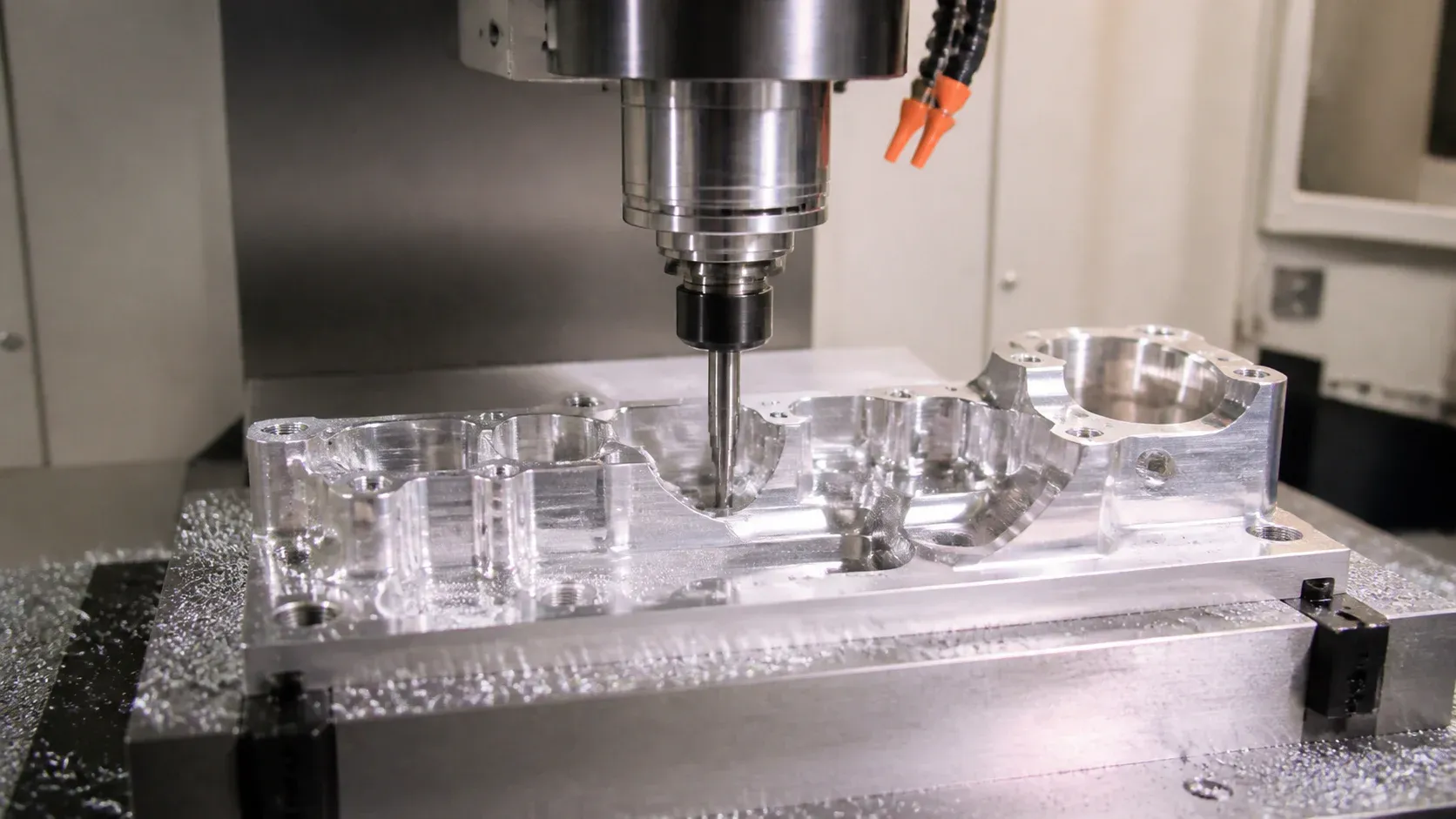
Cutting metal always makes heat: the cutting edge shears material away, and friction turns some of that energy into heat at the tool tip. A certain amount of heat is normal.
Overheating is different. It is when the tool gets so hot that it stops cutting properly: the finish gets worse, dimensions drift, the edge dulls or breaks, and in the worst case you see smoke, discoloured chips, or a burnt smell.
This article explains the main causes of an overheating cutting tool, how to recognise each one, and the practical fix for each.
How to Tell Your Tool Is Overheating
Not every hot tool is overheating. The warning signs are:
- Discoloured chips. Chips that come off blue, straw-coloured, or dark instead of bright metal have been heated well beyond normal cutting temperature.
- Smoke or a burning smell. Coolant burning off, or the smell of hot metal, means the cutting zone is far too hot.
- Poor surface finish. A finish that gets rougher as the cut goes on, or a surface that looks smeared or torn, often means the edge has overheated and dulled.
- Rapid tool wear. An edge that goes dull in minutes instead of lasting a shift is usually a heat problem.
- Dimensional drift. Parts that measure fine at the start of a run and drift out of tolerance later may be suffering from thermal growth.
If you see more than one of these signs, stop and diagnose before running the next part.
Cause 1: Spindle Speed Too High for the Material
The most common cause is simply cutting too fast. Cutting speed is the biggest single driver of heat at the tool tip, and every material has a workable speed range for a given tool. Steel, titanium, and stainless steel all need much lower cutting speeds than aluminium, because they are harder and conduct heat less well — the heat stays at the cutting edge instead of flowing into the chips and the workpiece.
Fix: Reduce the spindle speed and check the finish and chip colour. If you are switching from aluminium to steel or titanium, do not reuse the aluminium speeds. Start from the tool supplier's recommended values for the new material.
Cause 2: Feed Rate Too Low — the Tool Is Rubbing, Not Cutting
This one surprises people: a feed rate that is too slow can overheat a tool just as surely as a speed that is too high. When the feed per tooth is very small, the cutting edge does not take a proper chip. Instead, it rubs against the surface, generating friction and heat while removing almost no material, and the edge dulls quickly.
Fix: Increase the feed rate so each tooth takes a real chip. The cut should sound steady and the chips should come off as chips, not dust.
Cause 3: Chips Are Not Getting Out of the Cut
Heat does not only come from the cut itself. Chips trapped in the cutting zone are recut by the tool, and recutting generates more heat. In a deep pocket, a narrow slot, or a drilled hole, chips have nowhere to go, so they pile up, overheat, and stick to the tool. Aluminium is the worst offender, because its chips soften and fuse to the cutting edge.
Fix: Clear the chips. Use an air blast or coolant aimed at the cutting zone, take shallower passes in deep features, avoid full-width cuts where a smaller step-over will do, and use a pecking cycle when drilling deep holes.
Cause 4: The Tool Is Dull
A sharp tool shears metal. A dull tool pushes it. Pushing takes more force, and more force means more friction and more heat. A dull edge also has a larger contact area with the workpiece, which spreads the heat into the tool instead of into the chip. This is why a tool that was fine an hour ago can suddenly start overheating: the edge has worn past the point where it cuts cleanly, and from then on the heat builds on itself.
Fix: Replace or re-sharpen the tool before it gets to that point. Finishing a batch with a dull tool costs more in scrapped parts and rework than a new tool costs.
Cause 5: Wrong Tool Material or Coating for the Job
Tool material and coating decide how much heat the edge can tolerate. High-speed steel loses hardness quickly as temperature rises, so it overheats and dulls fast at speeds a carbide tool handles easily. For most production work in steel, stainless steel, and titanium, carbide is the standard choice because it keeps its hardness at much higher temperatures.
Coatings matter too. A coating that is excellent for one material can be a poor choice for another — some hard coatings increase friction and chemical reaction with soft metals like aluminium, which makes sticking worse. Match the tool material and coating to the workpiece material.
Cause 6: Not Enough Coolant — or Coolant in the Wrong Place
Coolant has two jobs: remove heat and flush chips away. If it is not reaching the cutting zone, it is doing neither. Common problems are a nozzle aimed at the wrong place, pressure too low to reach into a deep pocket, or coolant that has become diluted or contaminated.
Fix: Check that coolant is actually reaching the cut before blaming the tool or the speeds. Aim nozzles at the cut, and keep coolant concentration and condition checked regularly — old or diluted coolant cools poorly and can cause rust and staining on parts.
Cause 7: Depth of Cut Too Heavy
A very heavy depth of cut puts a large length of cutting edge in contact with the material at once — more friction, more heat, and higher cutting forces that deflect the tool.
Fix: Reduce the depth of cut and take an extra pass. For roughing, a high-efficiency toolpath that keeps engagement low and constant removes material quickly without the heat spike of a full-width cut.
What Overheating Costs Your Parts
An overheated tool does not just wear out faster. It leaves a worse finish, can push a part out of tolerance through thermal expansion, and can change the material at the surface — for example, by hardening or discolouring it. On medical, aerospace, or semiconductor parts, that surface damage can be a reason to reject the part even if the dimensions measure correctly.
Talk to Your Supplier About Difficult Materials
Some materials are harder on tools than others. Titanium and stainless steel hold heat at the cutting edge, tool steel is abrasive, and aluminium sticks to the edge. If your drawing calls for one of these, ask your machining partner how they handle it before the job starts.
At Golden Rainbow, we machine aluminium, stainless steel, brass, copper, tool steel, and titanium for medical, aerospace, semiconductor, industrial automation, and automotive customers, using CNC milling (3-axis, 4-axis, and 5-axis milling), turning, Swiss-type turning, and wire EDM. Standard tolerance is ±0.05 mm, with critical features to ±0.01 mm subject to drawing review. MOQ starts from 1 piece, prototypes take 3–7 working days, and production takes 10–15 working days depending on quantity and complexity.
Send us your drawing and we will review it and reply within 24 hours on working days.
Related reading:
FAQ
Is some tool heat normal?
Yes. Cutting metal always generates heat. The problem is when heat builds up faster than it can be removed.
What is the first thing to check when a tool overheats?
Look at the chips and the edge. Discoloured chips point to speed or evacuation problems; a dull edge means the tool needs replacing.
Why does my tool overheat on titanium but not on aluminium?
Titanium conducts heat poorly, so heat stays at the cutting edge, and it needs much lower cutting speeds than aluminium.
Does tool overheating affect part accuracy?
Yes. Heat expands the tool and the workpiece, which changes dimensions during the cut, and a hot tool leaves a poor finish that can fail inspection.
Get a quote: Send your drawing to Stella at stellachen@goldenrainbow.com, WhatsApp +86 135 9028 8306, or visit www.goldenrainbow.com to request a quote. We reply within 24 hours on working days.