CNC Machining
When Your Part Needs Wire EDM — and When Milling Is the Better Call
Wire EDM cuts hardened steel and sharp internal corners that milling can't reach. When your part needs it, what it can't do, and how to get a real quote.
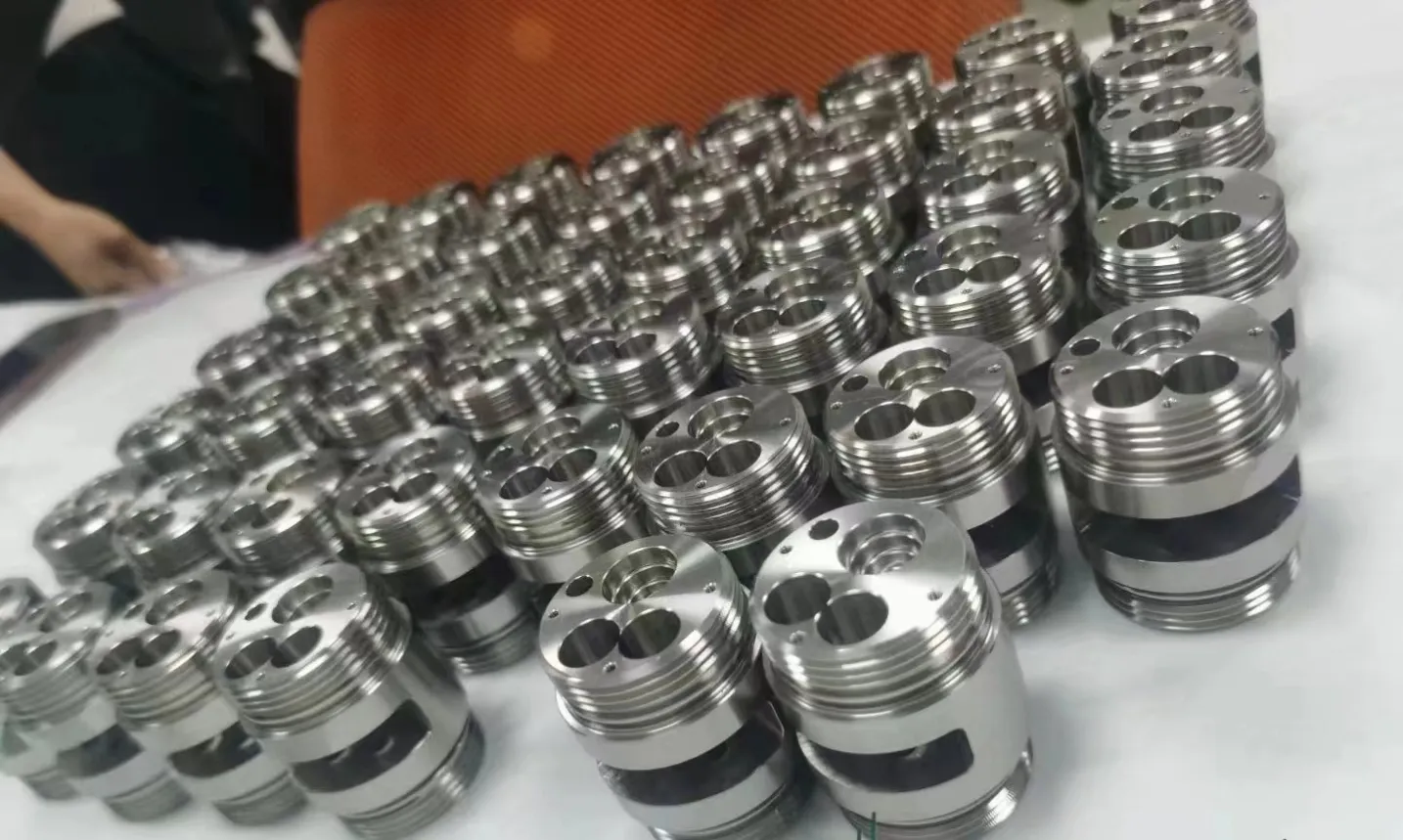
A buyer once sent us a drawing for a die plate and asked why two shops had already turned it down. The part looked ordinary: a flat plate of tool steel, a few holes, one rectangular opening in the middle. The problem was in two details the buyer had not thought twice about. The inside corners of that opening had to be nearly square, and the steel was already hardened to about 60 HRC. A milling cutter cannot make a square internal corner — it always leaves a radius at least as big as the tool — and it cannot cut steel that hard without destroying itself. The part was not badly designed. It was simply drawn for the wrong process.
That is the wire EDM question in a nutshell. Most parts should be milled. Milling is fast, flexible, and handles almost everything. But a small group of parts has features that milling physically cannot produce, and for those parts the right question is not "which shop is cheapest" but "which process can actually make this feature." This guide explains how to tell the difference, what wire EDM cannot do, and how to send an RFQ that gets you a real quote instead of a rejection.
1. How wire EDM cuts — and why that changes what is possible
A milling cutter removes metal by force: a spinning tool pushes against the workpiece and shears chips away. That force is the limit. It bends thin walls, it breaks small tools, and it wears out fast on hard material.
Wire EDM removes metal without touching the part at all. A thin wire — typically 0.1 to 0.3 mm in diameter (typical) — travels through the workpiece while rapid electrical sparks erode the metal along the programmed path. Because there is no cutting force, three things change at once: the hardness of the material stops mattering, the wire can turn corners far sharper than any end mill, and thin or delicate features are not pushed out of shape.
That is the whole reason the process exists. It is not a better version of milling. It is a different way of cutting, for the features milling cannot reach.
2. Five signs your part actually needs wire EDM
If any of these is true, send the part to wire EDM — or at least ask a shop that has it. The capability data below is presented as spec cards; all values are industry-typical (typical), not Golden Rainbow measurements, and the real capability for your part is confirmed against your drawing.
- Spec card 1 — Minimum internal corner radius: typically 0.05–0.15 mm. The limit is the wire radius itself. A milling cutter cannot cut an internal corner sharper than its own radius, and the smallest production end mills still leave roughly 0.25 mm or more. If your drawing calls for a corner radius under 0.15 mm — a punch, a die opening, a keyway, a gear profile — milling cannot make it. Wire EDM can.
- Spec card 2 — Material hardness: no practical limit. Wire EDM cuts hardened tool steel, carbide and titanium as easily as soft steel, because sparks do not care how hard the metal is. Milling, by contrast, struggles above roughly 45 HRC (typical): carbide tools wear out in minutes and the surface suffers. If your part is already heat-treated, or must be heat-treated before the precision features are cut, wire EDM is usually the only practical route.
- Spec card 3 — Profile tolerance: typically ±0.002–0.005 mm on profile features (typical). For a 2D profile that must hold its shape tightly — a die opening, a precision slot, a mating profile — wire EDM holds tighter profile tolerances than milling can reach on the same feature. Our general machining standard is ±0.05 mm, with critical features up to ±0.01 mm subject to drawing review; whether wire EDM can hold a tighter number on your specific feature depends on the geometry and is confirmed when we review the drawing.
- Spec card 4 — Cutting force: near zero. No tool pushes on the part, so thin walls, fine slots and delicate features stay true instead of deflecting. This is why wire EDM is used for fragile precision parts that would bend or chatter under a cutter.
- Spec card 5 — Cutting speed: slow, typically a few millimetres per minute on a rough pass (typical). This is the price of the precision above. Wire EDM is not a fast process, and that slowness is what drives its cost. It is the right tool for precision features, not for removing large volumes of material.
3. What wire EDM cannot do — and why milling still wins most jobs
Knowing the limits matters as much as knowing the strengths, because sending the wrong part to wire EDM wastes a quote cycle.
First, wire EDM only cuts through-profiles. The wire has to pass all the way through the workpiece, so it cannot make blind pockets, cavities, 3D sculpted surfaces or threads. Those still need milling or turning.
Second, it only cuts electrically conductive metals. Tool steel, stainless steel, titanium, brass, copper and aluminium all work. Non-conductive materials cannot be wire-cut at all.
Third, it is slow. If your part is a bracket, a housing or a plate with ordinary features, milling will make it faster and cheaper. Paying wire EDM rates for a part milling could have made is the most common way buyers overspend on this process.
The practical rule: mill it if you can. Send it to the wire machine only when hardness, sharp internal corners or tight profile tolerances rule milling out.
- 5-axis milling, for the parts that should be milled: https://www.goldenrainbow.com/5-axis-cnc-machining
4. The route most parts actually take: mill soft, harden, then wire-cut
In practice, very few parts are made by wire EDM alone. The standard route for a hardened precision part runs in three steps, and understanding it helps you read a quote and plan a lead time.
Step one: rough the part on a mill or lathe while the steel is still soft. This is where the bulk of the material comes off quickly and cheaply — pockets, holes, outer shape, everything that does not need the wire.
Step two: heat-treat the part to its final hardness. Cutting the precision profile after heat treatment, rather than before, means the dimensions do not move when the part is hardened.
Step three: wire-cut the precision profile, the sharp corners and the tight-tolerance features into the hardened part.
If you send a drawing and the quote comes back as a two-stage job, that is not the shop padding the price. It is the correct sequence, and it is also why the lead time for a wire EDM part is usually longer than for a simple milled part. Samples run 3–7 working days and production 10–15 working days for most machined parts; a two-stage mill-then-wire route may need longer, so confirm the date when you send the drawing.
5. How to send a wire EDM RFQ that gets a real quote
Most wire EDM quotes stall because the RFQ is missing one of five facts. Send all five and the shop can price the job from the drawing instead of coming back with questions.
Material grade and hardness state. Say whether the material is supplied soft or already hardened, and to what hardness. "Tool steel, hardened to 60 HRC" and "tool steel, soft" are two different jobs with two different prices.
Corner radii, called out on the drawing. Do not leave the internal corner radius to assumption. Write the number on the drawing. If a corner can be 0.5 mm, say so — the shop may be able to mill it and save you money.
The profile tolerance, on the feature that matters. Put the tight tolerance only on the features that need it. Calling out the tightest number on every feature is the fastest way to inflate a quote, because every tolerance step tighter than necessary adds cost.
Quantity. Wire EDM is slow, so the per-part cost falls as the cutting path is shared across a batch. One piece and one hundred pieces are priced very differently.
Whether heat treatment happens before or after cutting. If you have already hardened the part, say so. If the shop is expected to arrange it, say that too.
One last check before you send: ask yourself whether the part could be milled if the corner radius were relaxed or the material supplied soft. If the answer is yes, ask the shop — a small drawing change can move a part from the slow, expensive process to the fast one, and a good supplier will tell you when that is possible. Golden Rainbow holds ISO 9001:2015, ISO 13485:2016 and IATF 16949:2016 certifications, and we reply to RFQs within one working day.
- Send your drawing for a quote: https://www.goldenrainbow.com/request-a-quote
- Our machining capabilities: https://www.goldenrainbow.com/capabilities
FAQs
Can wire EDM cut any metal?
No. It only cuts electrically conductive metals — tool steel, stainless steel, titanium, brass, copper and aluminium. Non-conductive materials cannot be wire-cut at all.
How sharp can an internal corner be?
Typically down to about 0.05–0.15 mm radius, limited by the wire diameter (typically 0.1–0.3 mm). An end mill cannot go below its own tool radius.
Is wire EDM more expensive than milling?
Usually yes per part, because it cuts slowly. But for hardened steel or sharp corners it is often cheaper than the alternative — milling before heat treatment plus rework, or a rejected part.
Can wire EDM make threads or blind pockets?
No. It cuts through-profiles only. Threads, blind pockets and 3D sculpted surfaces still need milling or turning — most parts use both processes.
What should I include in a wire EDM RFQ?
Material grade and hardness state, a drawing with corner radii called out, the profile tolerance, quantity, and whether heat treatment happens before or after cutting.