CNC Machining
Deep Holes in CNC Machined Parts: What Makes a Hole "Deep" — and What to Check Before You Send It for Quoting
A hole 8× deeper than its diameter is a different job from normal drilling. Why straightness matters more than diameter, and what to put on your drawing.
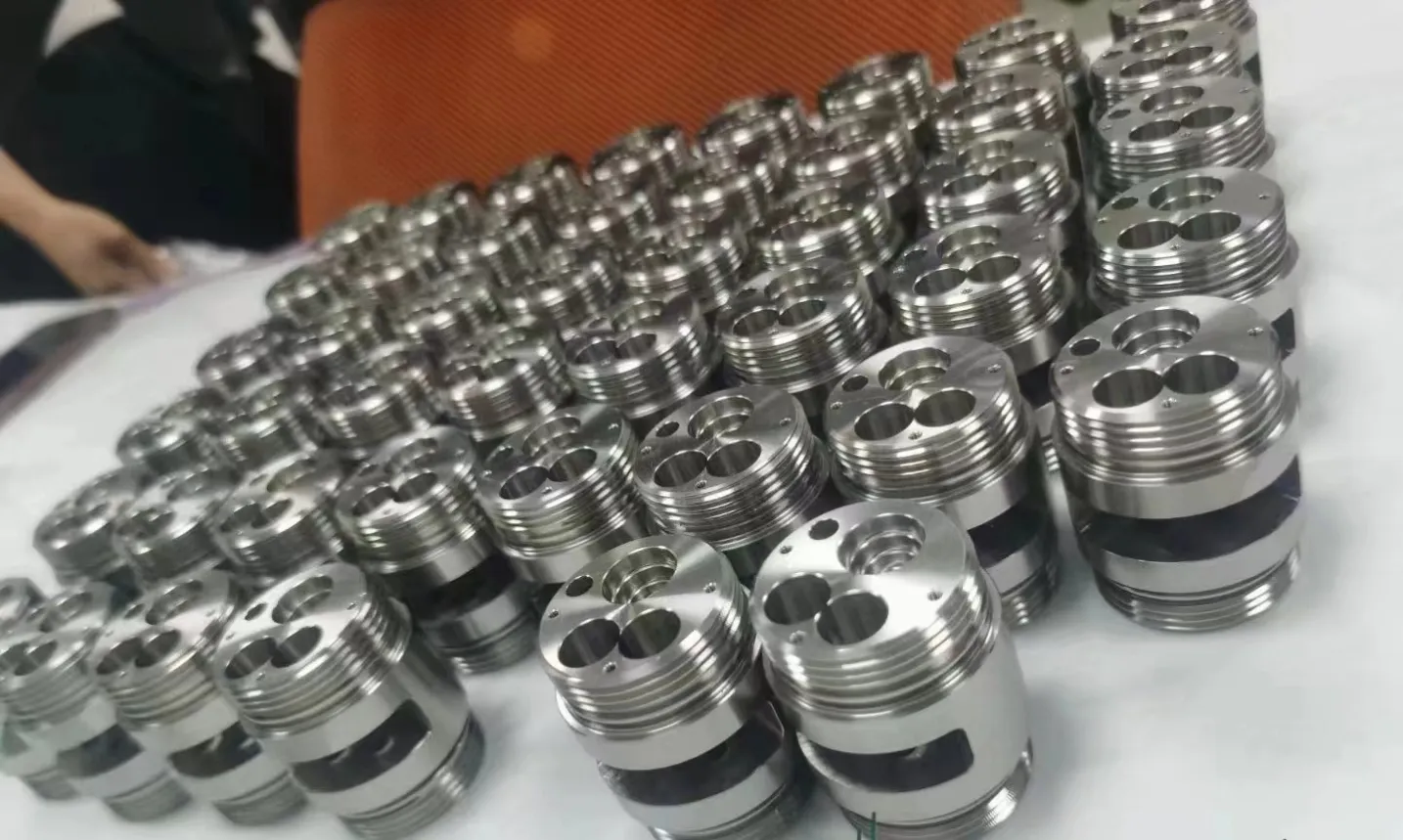
1. The hole that looked simple on the drawing
A buyer orders a housing with a 6 mm bore, 40 mm deep. The parts arrive. The bore measures 6 mm at the mouth, the diameter is in tolerance, and yet the shaft will not slide through. The supplier re-measures and finds the bore drifts sideways as it goes deeper — curved, not straight.
This is the most common deep-hole failure, and it surprises buyers because nothing on the drawing warned them. A short hole is a drilling job. A deep hole is a chip-evacuation, heat, and deflection job that happens to end in a hole. The drill is a long, thin tool cutting blind at the bottom of a narrow tunnel. Chips have nowhere to go, so they pack around the cutting edges. Heat builds up where coolant cannot reach. The drill bends a fraction of a millimetre — and a fraction is all it takes for a shaft to bind halfway in.
If your part has a hole that is several times deeper than its diameter, the drawing needs more than a diameter and a tolerance. The rest of this article explains what to check before you send it for quoting, so the first batch fits instead of the second.
2. What "deep" actually means: the depth-to-diameter ratio
Machinists judge a hole by one number first: depth divided by diameter, written as L/D. A 6 mm hole 12 mm deep is 2:1. The same 6 mm hole 30 mm deep is 5:1, and 48 mm deep is 8:1. Same diameter, completely different job.
The bands below are typical industry guidance, not a Golden Rainbow measurement — every shop draws the line slightly differently, and the material matters too (stainless steel and titanium are harder to drill deep than aluminium or brass, because chips are tougher and heat builds faster).
- Spec card 1 — Up to 3:1 (typical): Ordinary drilling. A standard drill on a mill or lathe handles this routinely. Chip evacuation and straightness are rarely a problem.
- Spec card 2 — 3:1 to 5:1 (typical): Needs care. Expect peck drilling (the drill retracts regularly to clear chips), slower feeds, and attention to the entry face. Straightness should be discussed, not assumed.
- Spec card 3 — Beyond 5:1 (typical): Specialist territory. Standard drilling stops behaving predictably here: the drill wanders, chips pack, and the bore can come out bell-mouthed or curved. The supplier needs to confirm feasibility against your exact diameter, depth, material, and straightness requirement — before quoting, not after the parts arrive.
- Spec card 4 — Beyond 10:1 (typical): Dedicated deep-hole processes exist for this range, and not every general machining shop runs them. If your bore sits here, ask the supplier directly whether they can do it in-house or whether the bore needs a different route.
One practical step you can take today: calculate L/D for every hole on your drawing. If any hole is past 5:1, flag it in your RFQ email instead of letting the supplier discover it. A supplier who sees the flag plans the setup around it; a supplier who finds it mid-job charges you for the surprise.
3. Straightness is the specification that matters — not just diameter
Buyers usually tolerance the diameter and assume the rest follows. For a deep hole, the diameter is the easy half. What decides whether the part works is whether the bore stays on its axis from entry to exit.
Think of it this way: a bore can measure exactly 6.00 mm at every point along its length and still be useless, because each cross-section sits slightly off-centre from the last. The hole is a gentle curve. A gauge pin goes in a few millimetres and stops. The diameter was never the problem.
Three things to get right on the drawing:
- Call out straightness, not just diameter. A straightness tolerance per length (for example, per 100 mm, as a typical way of writing it) tells the supplier what you actually need, and gives them something to measure. Without it, the supplier can only promise the diameter — and you can only argue about the diameter when the part fails.
- Say whether the hole is through or blind. A blind hole traps chips at the bottom and needs a different approach from a through hole, where chips and coolant can exit the far side. A through hole that breaks into a cross-hole or a cavity is an interrupted cut, and the drill deflects at the interruption — mention it.
- Check the entry face. A drill entering on a sloped or uneven face wanders from the first millimetre. If the entry face is angled or rough, say so, and ask the supplier how they plan to start the hole square.
None of this needs exotic metrology language. One line on the drawing — "straightness 0.05 mm per 100 mm, typical" is the kind of note a shop can actually work to — does more than a page of tight diameter tolerances.
4. What to write on the drawing for a deep hole
Before you send the drawing, run through this checklist. Each item removes one round of back-and-forth, and the whole list takes five minutes:
- Diameter and its tolerance — and only as tight as the mating part needs. Golden Rainbow's standard tolerance is ±0.05 mm; critical features can be held up to ±0.01 mm, subject to drawing review. A deep bore rarely needs its tightest tolerance on the diameter — it needs it on straightness.
- Depth, and whether the hole is through or blind — with the L/D ratio if you have calculated it.
- Straightness requirement — per length, as above.
- Material — aluminium, stainless steel, brass, copper, tool steel, or titanium. The material changes the drilling strategy, and the supplier cannot quote the hole without it.
- Entry and exit conditions — flat face or angled, any cross-holes the bore passes through, and whether the exit side can have a small burr or must be clean.
- Surface finish inside the bore, only if it matters — a bore that carries a sliding shaft needs a smoother finish than a clearance hole for a bolt. Name the finish you need (as a buyer-specified option, confirmed at the quoting stage) instead of writing "smooth".
If any of these is missing, the supplier has to guess — and a guessed deep hole is the one that comes back curved. A complete drawing is also the fastest route to a fast quote: Golden Rainbow replies within one working day, and a drawing with the hole fully specified is the one that gets a firm price instead of a list of questions.
5. What to ask your supplier before you place the order
A deep hole is a feasibility question before it is a price question. Ask these three things in your RFQ, and the answers will tell you more about the supplier than the unit price will:
- "Can you confirm this bore is feasible on your equipment, at this L/D and straightness?" A good supplier answers against your exact numbers, or tells you what would have to change — a larger diameter, a looser straightness callout, a different material. A supplier who quotes without asking has not thought about the hole yet.
- "Will the bore need a second operation?" Some deep bores are drilled, then reamed or honed to size and straightness. That second step is normal, but it adds time — ask about it now, because it affects the lead time. Golden Rainbow's typical lead times are 3–7 working days for samples and 10–15 working days for production, depending on quantity and complexity.
- "How will you check the bore before shipping?" The check that matters is a measurement along the bore's length, not a single reading at the mouth. Ask what the first-article check covers. If the supplier only measures the entry diameter, the curved bore ships anyway.
One last point: order a single piece first if the bore is the risky feature. Golden Rainbow accepts orders from 1 piece, so you can prove the deep hole on one part before committing to a batch. A one-piece trial costs a fraction of a batch of housings that will not accept their shafts.
FAQs
Q1: How deep is "deep" for a drilled hole?
A: Past about 5× the diameter (typical), standard drilling becomes unreliable — chips pack, the drill wanders, and the bore can curve. Up to 3× diameter is routine work.
Q2: Can any CNC shop drill a deep hole?
A: Most shops drill to about 3× diameter without trouble. Beyond 5×, ask the supplier to confirm feasibility against your exact diameter, depth, material, and straightness requirement before quoting.
Q3: Why won't my shaft fit if the bore diameter is in tolerance?
A: Diameter is only half the story. A bore can measure correctly at every point and still curve sideways along its length. Straightness, not diameter, is usually what stops the shaft.
Q4: Does a deep hole cost more than a normal hole?
A: Yes — slower feeds, peck cycles to clear chips, extra setup, and more inspection along the bore's length. The cost grows with the depth-to-diameter ratio and with how tight the straightness callout is.
Q5: What should I put on the drawing for a deep hole?
A: Diameter and tolerance, depth, through or blind, a straightness callout per length, material, and any cross-holes the bore passes through. A complete note gets you a firm quote instead of questions.
Next step
If your drawing has a hole past 5× its diameter, send it for a quote and flag the bore in your message — the feasibility check is part of the quote, not an afterthought.