CNC Machining
Small-Batch Swiss Machining: When It Beats Conventional Turning
Small-batch Swiss machining explained: when it beats conventional turning, what sizes and tolerances it suits, and what to include in your RFQ.
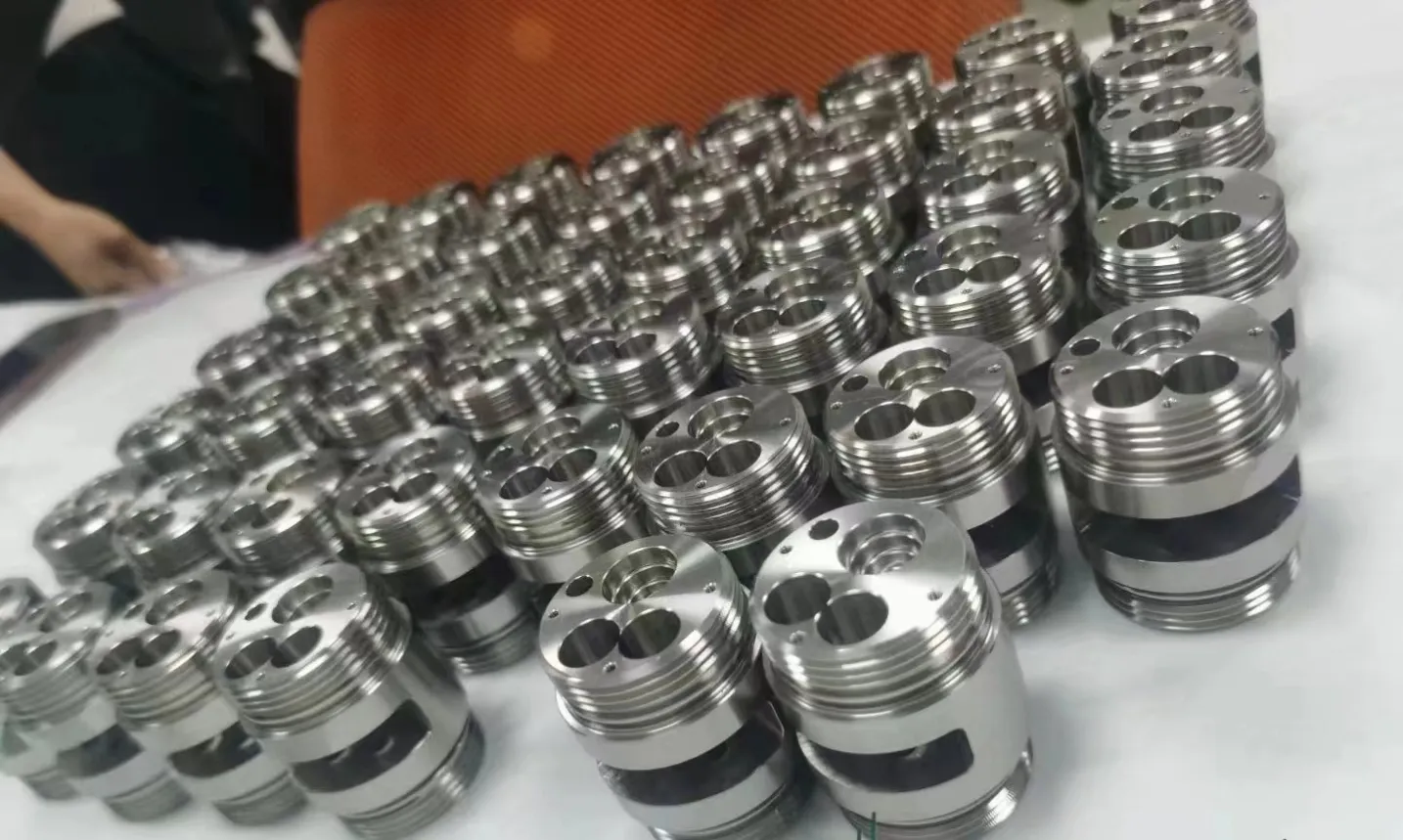
If you need a few hundred small, precise turned parts — pins, shafts, connectors, fittings — you have probably been quoted both Swiss machining and conventional CNC turning. The two processes look similar on a quote, but they are built for different part shapes. Choosing the wrong one costs you money on every part, or forces a second operation that wipes out the saving.
This guide explains how Swiss machining works, when it beats conventional turning for small batches, and what to put in your RFQ so the quote you get is the price you actually pay.
1. What Swiss machining is
A Swiss-type lathe feeds bar stock through a guide bushing, so the cutting tool always works right next to the point where the bar is supported. The bar slides forward as the part is cut, instead of the tool travelling along a long, unsupported length.
That single difference is what makes Swiss machining good at long, slender parts. On a conventional lathe, a thin shaft bends away from the tool as it gets longer. On a Swiss lathe, the material is supported centimetres from the cut, so deflection stays small even on parts many times longer than their diameter.
Swiss lathes also cut several features in one setup. Turning, milling, drilling, and threading can happen without taking the part out of the machine, which matters most when the batch is small and every extra setup is spread across only a few parts.
2. Why small batches suit Swiss machining
Small batches punish setup time. If a job needs two hours of setup and you order ten parts, each part carries twelve minutes of setup cost. If you order a thousand, the same setup costs almost nothing per part.
Swiss machining keeps small-batch costs down in three ways:
- Fewer setups. Multiple operations in one clamping means fewer fixtures and fewer chances for a datum to shift between operations.
- Less handling. Parts are cut to length and finished in the machine, so there is no second handling step between turning and a separate milling or drilling operation.
- Consistent first articles. Because the bar is supported at the cut, the first part and the fiftieth part tend to measure the same, which shortens first-article approval on a small order.
Our minimum order is 1 piece, so a small batch is a normal order for us, not an exception.
3. When Swiss beats conventional turning
Swiss machining is usually the better choice when your part has one or more of these traits:
- Long and thin. Parts where the length is several times the diameter, such as shafts, pins, and standoffs, where a conventional lathe would need a steady rest or a second operation.
- Small diameter. Swiss machines are built around bar stock, so they are at their best on small-diameter parts.
- Many features in one part. A part that needs turning plus a milled flat, a cross hole, or a thread is a good Swiss candidate, because all of it can happen in one setup.
- Tight tolerances on several features. Holding several dimensions relative to one another is easier when the part never leaves the machine between operations.
Our standard tolerance is ±0.05 mm, and critical features can be held up to ±0.01 mm, subject to drawing review. Tell us which dimensions are critical on the drawing, and which are not — tolerance applied only where it functions keeps the price down.
4. When conventional turning is the better choice
Swiss machining is not the answer for every turned part. Conventional CNC turning is usually better when:
- The diameter is large. Swiss machining works from bar stock up to 32 mm diameter (typical). Parts above that size belong on a conventional lathe.
- The part is short and simple. A short bushing with one bore and one outside diameter does not need the guide-bushing support, and conventional turning will usually quote lower.
- The part needs a large face or heavy stock removal. Removing a lot of material from a large blank is conventional turning work.
If you are unsure which process fits your part, send the drawing and we will tell you. There is no charge for the review, and we reply within one working day.
5. Capability at a glance
The numbers below are the capability figures we publish for Swiss machining. Dimensions marked "typical" are industry-typical values, not measured figures from a specific job.
- Bar diameter: up to 32 mm (typical).
- Part length: up to 250 mm (typical).
- Standard tolerance: ±0.05 mm; critical features up to ±0.01 mm, subject to drawing review.
- Minimum order: 1 piece.
- Materials: aluminium, stainless steel, brass, copper, and titanium. Common grades include aluminium 6061 and 7075, and stainless steel 304 and 316 (typical).
- Processes in one setup: turning, milling, drilling, and threading, as the part requires.
6. What to put in your RFQ
A Swiss machining quote is only as accurate as the information in it. Include these five things and the price you are quoted is far more likely to be the price you pay:
- A drawing or 3D model with tolerances and surface finish requirements marked. State the grade and temper for the material, not just the family name.
- The material. Name the alloy and grade — for example, aluminium 6061-T6 rather than just "aluminium" — because machinability and stock availability change the price.
- Which dimensions are critical. Mark the features that must hold ±0.01 mm and let the rest stay at the standard ±0.05 mm.
- Quantity and repeat frequency. A 50-piece order that repeats monthly is quoted differently from a one-off 50-piece order.
- Surface finish, as you specify it. Tell us the finish you need — for example, anodising or passivation — as a buyer-specified option, and we will confirm how it is handled before quoting.
Samples take 3–7 working days and production runs 10–15 working days, depending on quantity and complexity. Golden Rainbow is ISO 9001:2015 Certified, ISO 13485:2016 Certified, and IATF 16949:2016 Certified.
FAQs
1. What is the minimum order quantity for Swiss machining?
Our minimum order is 1 piece. Small batches are a normal order for us, and samples take 3–7 working days.
2. What bar size can Swiss machining handle?
Bar stock up to 32 mm in diameter (typical), with part lengths up to 250 mm (typical). Larger diameters suit conventional CNC turning.
3. How tight a tolerance can Swiss machining hold?
Our standard tolerance is ±0.05 mm. Critical features can be held up to ±0.01 mm, subject to drawing review.
4. How long does a small-batch Swiss order take?
Samples take 3–7 working days and production runs 10–15 working days, depending on quantity and complexity.
5. Is Swiss machining cheaper than conventional turning for small batches?
It depends on the part. Swiss is usually cheaper for long, slender, feature-rich parts, because several operations happen in one setup.
Get a quote
Send your drawing and we will review it and reply within one working day.
- Request a quote: https://www.goldenrainbow.com/request-a-quote
- Swiss machining capability page: https://www.goldenrainbow.com/swiss-machining
- 5-axis CNC machining: https://www.goldenrainbow.com/5-axis-cnc-machining