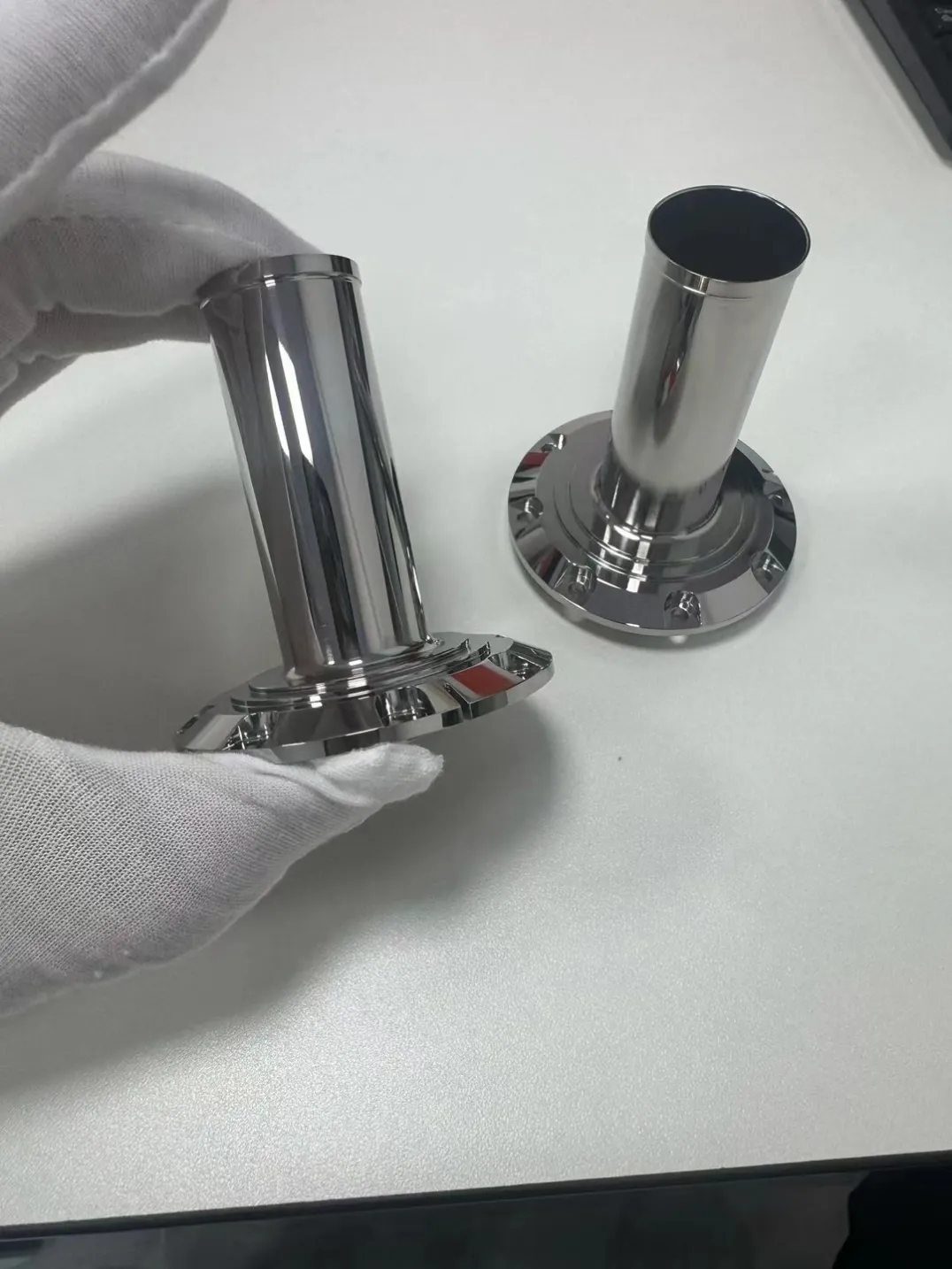
011
Processes
CNC milling (3-axis, 4-axis and 5-axis milling only), CNC turning, Swiss-type turning, wire EDM
Stainless Steel CNC Machining
Golden Rainbow machines stainless steel parts in Shenzhen by milling, turning and Swiss-type turning, including threaded fittings, flanges and multi-hole components.
Drawings can also be emailed to stellachen@goldenrainbow.com.
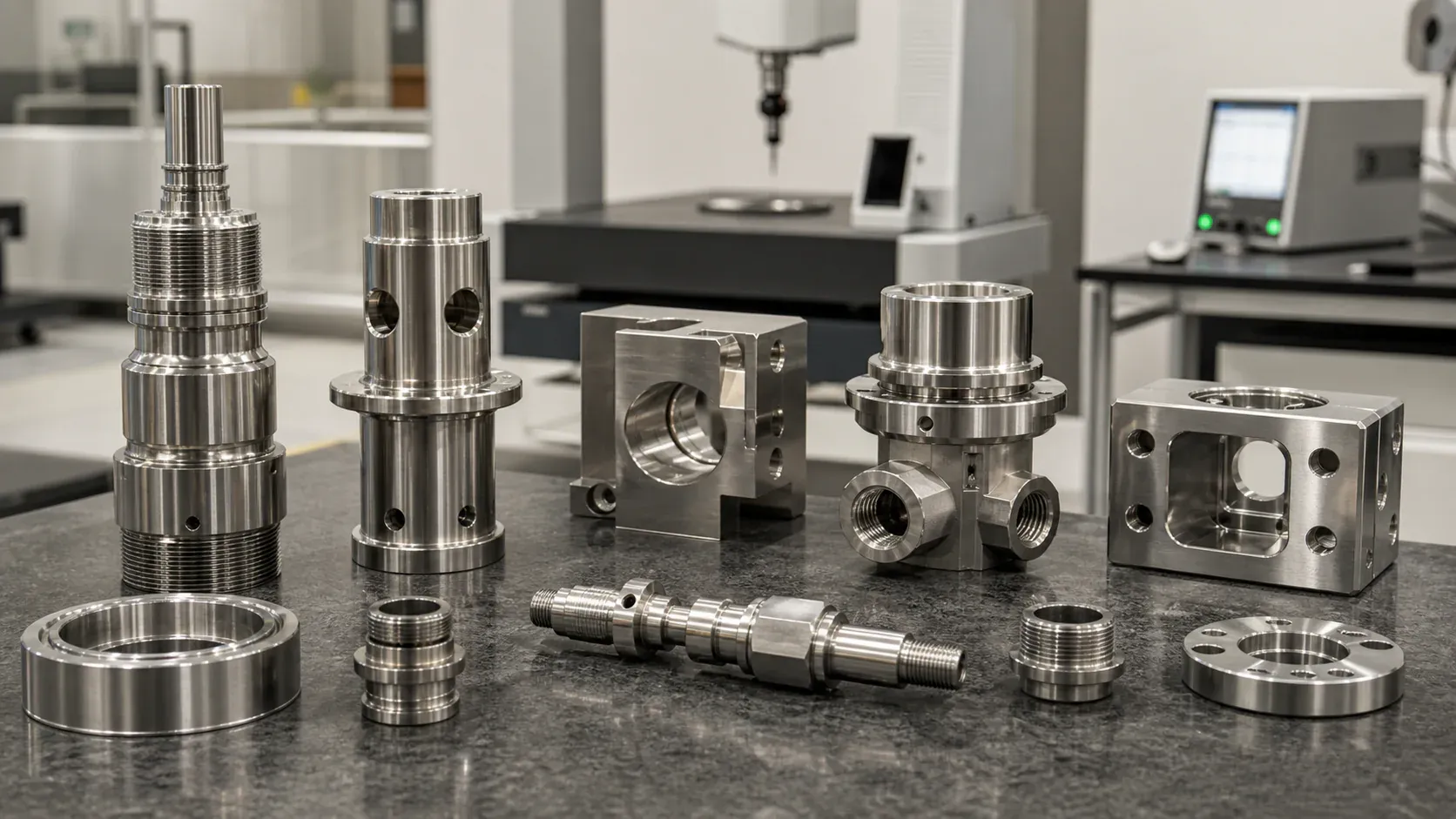
Finished machined parts
Orders start from one piece, standard tolerance is ±0.05 mm, and quotes are reviewed by an engineer and returned within one working day.
If your part is a threaded fitting, a flange, a valve body or a precision component that has to survive a corrosive environment, this page explains which stainless grades are commonly machined here, what the work looks like, and what to send us for an engineer-reviewed quote.
Stainless steel is not a difficult material to buy — it is a demanding material to machine, and the difference shows up in tool wear, heat and machining time, which is why the material choice and the tolerance are settled at drawing review, before any price is given.
The two grades most commonly machined here are 304 and 316. Both are listed here as typical commonly machined grades
— the grade on your drawing is what an engineer reviews before confirming material, process and price, and if the grade you need is not one we machine, we will tell you at review stage rather than substituting a different grade without your agreement.
304 is the general-purpose grade: the usual choice where the part needs corrosion resistance in ordinary indoor or industrial environments, and where strength and cost have to balance. Threaded fittings, flanges, brackets and housings in 304 are routine work.
If your drawing specifies 304, send the grade exactly as written — including any suffix on the drawing — and the quotation is prepared against that grade.
316 is the grade buyers reach for where chloride or marine exposure is part of the part's life — washdown, coastal or chemical-adjacent service. It costs more to machine than 304 and work-hardens more readily,
so the choice should follow the part's actual conditions rather than defaulting to the higher grade. Tell us the environment the part will work in, and the review will confirm whether 316 is the right call for your drawing, or whether 304 covers it.
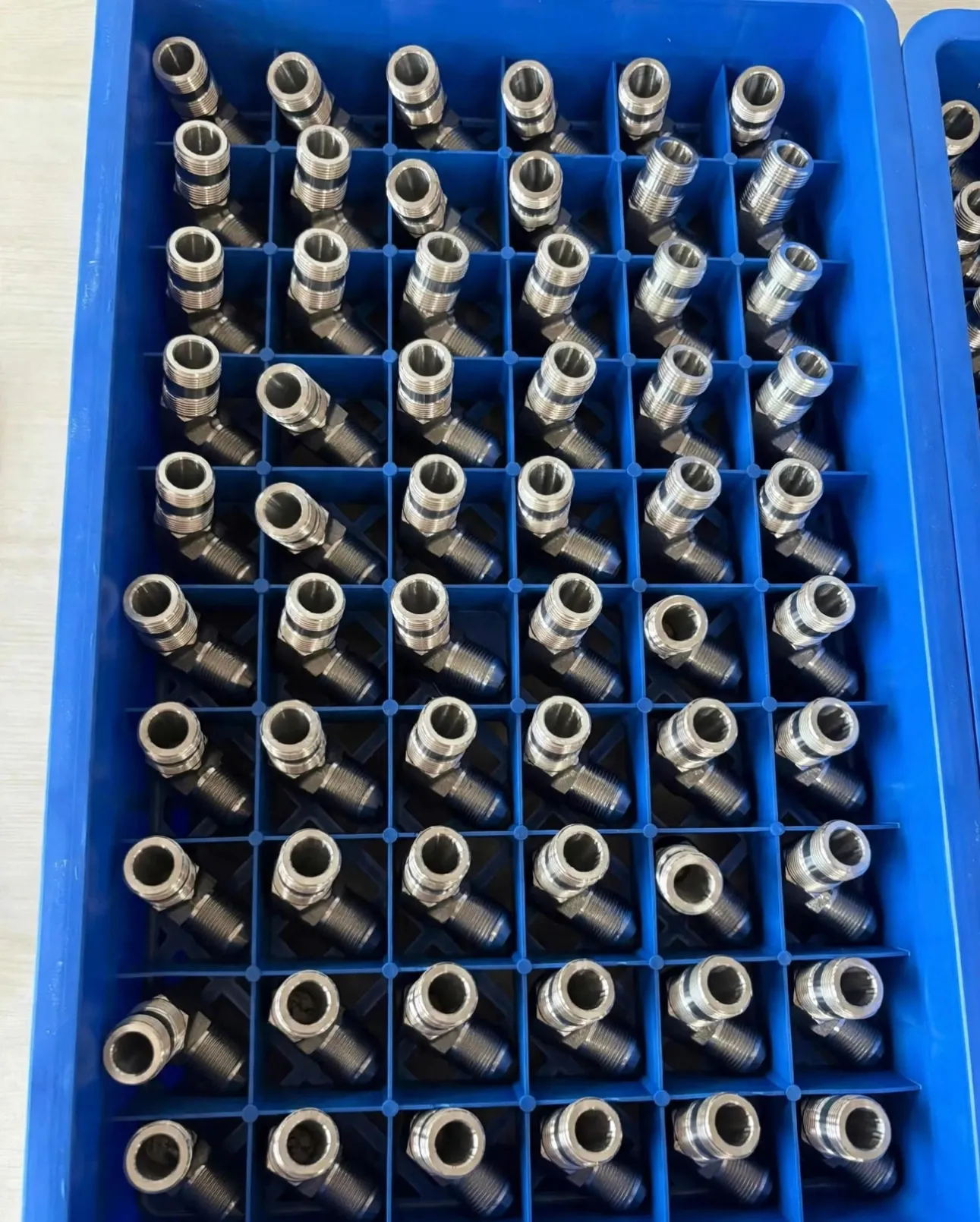
Threaded fittings are the most common stainless work here: small fittings where the thread, the sealing face and the bore must stay in position relative to each other, in a material that does not forgive a poor thread.
The multi-hole threaded cylinder in the photo on this page is an example of the type — shown only as a finished machined part; a photograph alone cannot establish its grade, industry or use.
Flanges form a second group: flat sealing faces, bolt-hole patterns and bores that must stay concentric and flat, often in 304 or 316.
Multi-hole components — housings and connector bodies with several drilled and tapped holes from different faces — form a third group, where the hole pattern's position matters more than any single hole.
Stainless rings, elbow fittings and similar precision components are also regular work.
Parts that also need small-diameter precision turning are covered on our Swiss Machining page.
Stainless steel is harder on tools than aluminium or brass. It work-hardens if the tool dwells, it holds heat at the cut, and it wears cutting edges faster
— which is why stainless parts take more machining time than the same shape in aluminium, and why the price reflects tooling and time rather than material alone.
These are general properties of the material, not a claim about any single job: the quotation for your part is built from your drawing, not from a rate card on this page.
Two of the problems stainless brings are covered in our published machining articles: chatter on long or thin features, and cutting tools overheating when heat cannot clear the cut.
The same countermeasures discussed there — shorter tool stick-out, a rigid setup, and keeping the cut moving — are the ones applied to stainless work here.
What the articles do not do is promise a specific surface finish or a specific cycle time for your part: both are settled at drawing review.
If your part is thin-walled or has deep, small-diameter holes, say so in the enquiry. Thin walls in stainless can move as material is removed, and small deep holes need a different plan than a through-hole in a flange.
Raising those features at review stage is what keeps the tolerance achievable, rather than discovering the problem after machining.
The table below contains figures that are already confirmed or already authorised for general use on the site.
CNC milling (3-axis, 4-axis and 5-axis milling only), CNC turning, Swiss-type turning, wire EDM
304 and 316 (typical commonly machined grades; final grade confirmed against your drawing at review stage)
±0.05 mm
±0.01 mm, subject to drawing review and confirmation
1 piece
3–7 working days
10–15 working days, depending on quantity and complexity
Up to 800 × 500 × 500 mm (typical work envelope; final capability confirmed against your drawing)
Stainless steel (this page); aluminium, brass, copper, tool steel and titanium are machined on other routes
Not claimed on this page — the finish is agreed at quotation stage
STEP file + dimensioned PDF, with material, grade, quantity and key tolerances noted
Engineer drawing review and reply within one working day
Metric M3–M20 and UNC/UNF equivalents (typical range; final range confirmed against your drawing at quotation stage); thread class 6H (metric) / 2B (imperial) as standard.
304 / 316 and 800 × 500 × 500 mm are industry-typical values, included at the site owner's request. They are not measured figures for Golden Rainbow's own machines or stock.
Read the tolerance lines together. The tighter figure is not a blanket promise for a whole part: it applies to individual critical features, only where geometry, material and inspection access allow it.
— which is why every drawing with a critical callout is reviewed by an engineer before it is confirmed in a quotation.
If a tolerance cannot be held reliably, we will say so at review stage.
Quality on a stainless part starts before metal is cut. Every enquiry drawing goes through an engineer review that checks datums, critical tolerances, tool access and inspection access, and any ambiguous feature is raised at quotation stage, not discovered after machining.
Agreeing each critical feature's dimension, datum and tolerance up front prevents a part that measures well feature by feature but does not fit its mating part.
During machining, key dimensions are checked as the process proceeds, so drift is caught on the first parts rather than at the end of a batch.
Finished parts receive a final inspection against the drawing before packing and dispatch, and any feature confirmed as critical during review is treated as a critical check.
If inspection shows a problem, the part is held and the cause addressed before anything ships. If your project needs anything specific documented with the delivery, tell us at enquiry stage so it can be agreed in the quotation.
No specific inspection equipment or report format is named on this page, because none has been confirmed — the wording above describes the process, not a certificate.
As a general rule, 304 covers ordinary indoor and industrial environments, and 316 is the choice where chloride or marine exposure is part of the part's life. The choice should follow the part's actual conditions, not default to the higher grade:
Yes. Threaded fittings are regular work here, and the multi-hole threaded cylinder shown on this page is an example of the type. As a typical guide, metric threads M3–M20 and UNC/UNF equivalents are commonly machined
Stainless is harder on tools than aluminium or brass: it work-hardens, holds heat at the cut, and wears cutting edges faster, so the same shape takes more machining time. The price for your part is still built from your drawing, not from a rate on this page.
Our standard tolerance is ±0.05 mm. Individual critical features can reach ±0.01 mm, subject to drawing review and confirmation, because achievability depends on geometry, material and access for machining and inspection.
The minimum order quantity is 1 piece. Samples normally take 3–7 working days depending on complexity, and production takes 10–15 working days depending on quantity and complexity, using the same process as the approved sample.
Send your STEP file and dimensioned PDF to stellachen@goldenrainbow.com, or submit the enquiry through /request-a-quote and email the files straight after.
Include the material and grade, the quantity — even if it is a single piece — and the tolerances and thread details that matter most.
An engineer will review the drawing and reply within one working day, with a quotation or with the questions that must be answered before a reliable price can be given.
Still deciding between 304 and 316, or unsure whether a thread callout is covered? Send the drawing anyway and say so: the review will state which grade and route we recommend — and why.